Edward VI (1547-53)
Edward VI inherited a monetary system in meltdown. During Henry VIII's reign the coinage was significantly debased due to a financial crisis in the Royal Treasury. During Edward's brief reign the quantity of silver with a value of a farthing was so small that the work it took to manufacture farthings was cumbersome and unprofitable, and the coins produced proved unpopular due to their tiny size. Produced from 1551, "Third Period" halfpennies contained so little silver that on 17 August 1551 they were devalued to be worth a farthing. This was the last reign in which hammered silver farthings were minted.
Queen Elizabeth I ordered the production of a new silver Three-farthings... but that's another story.
Historical Context
Two issues of farthings attributed to this reign:
· Third Period - Fine Silver Issue
· Third Period - Very Base Issue Halfpennies (pseudo farthings)
Indentures between 1547-1551 authorised the striking of farthings under Edward VI, but there is no evidence of any being struck in his name before 1551. Only a single farthing is known from the fine silver issue commissioned in October 1551. No other Edward VI farthings are known. But, with the debasement of the coinage of 1551, the halfpenny was devalued for use as a farthing...
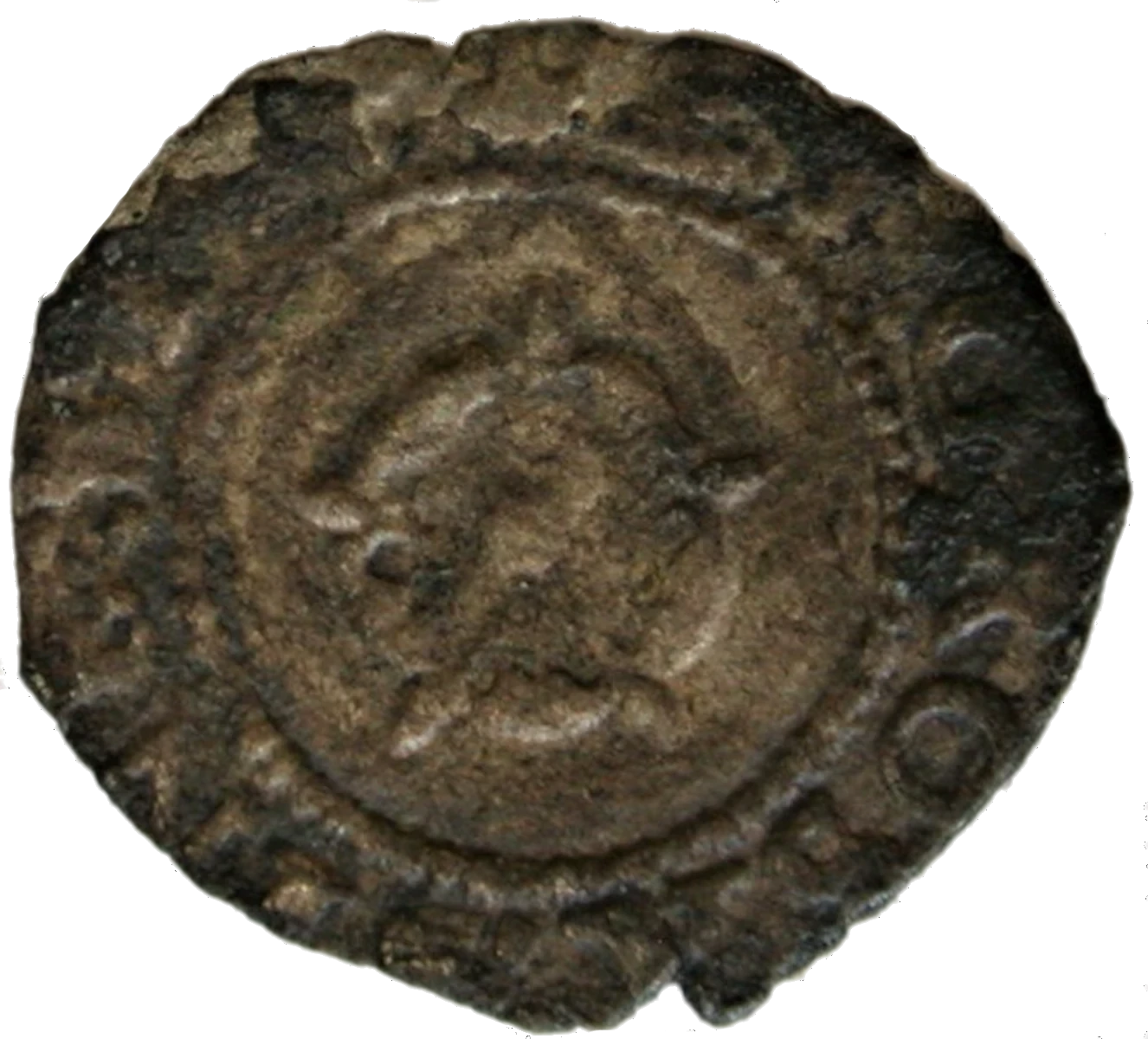
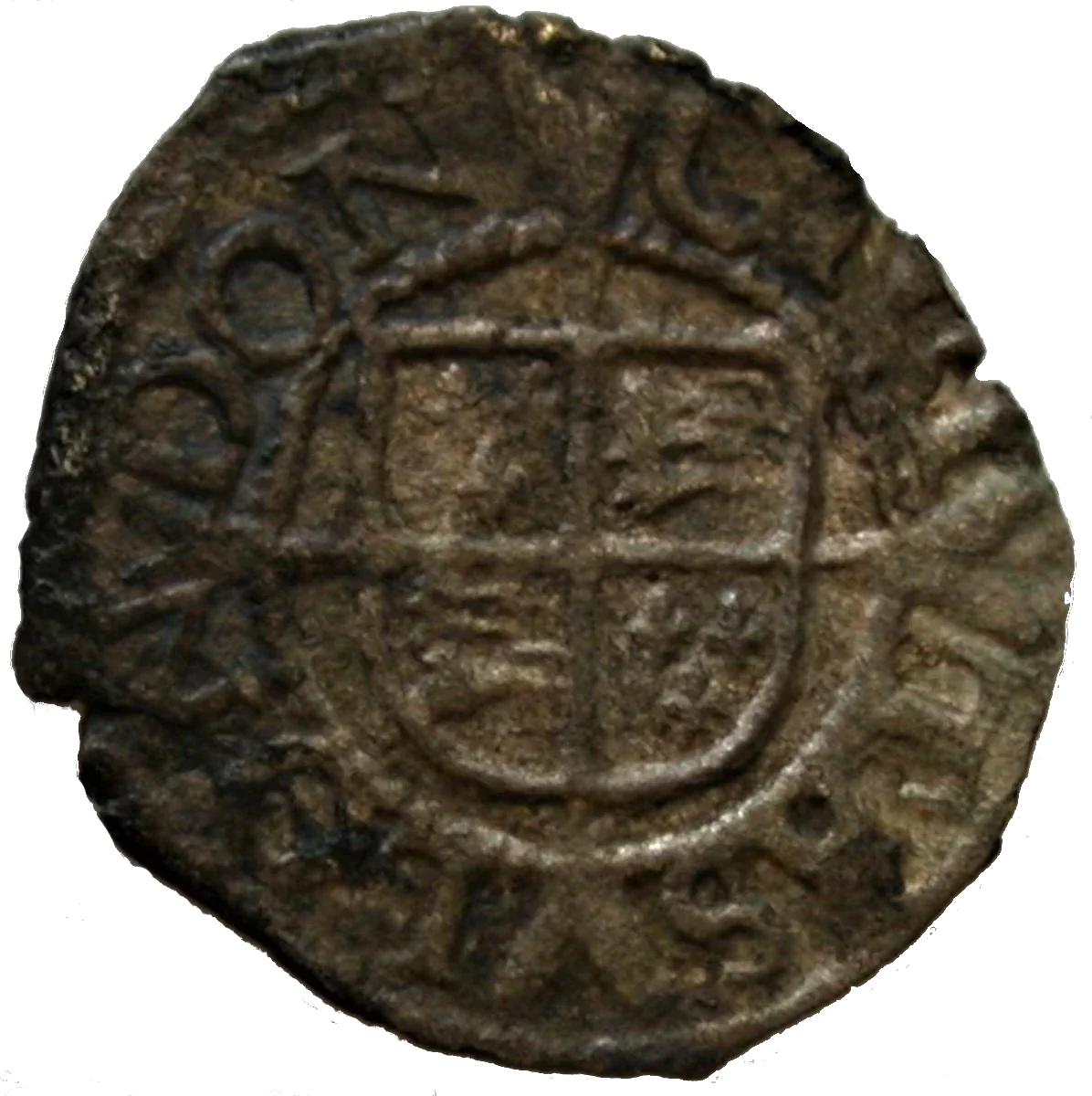
Coin Characteristics: Third Period - Fine Silver Issue
- Metal: Silver
- Denomination: Farthing (¼ penny)
- Mint(s): London
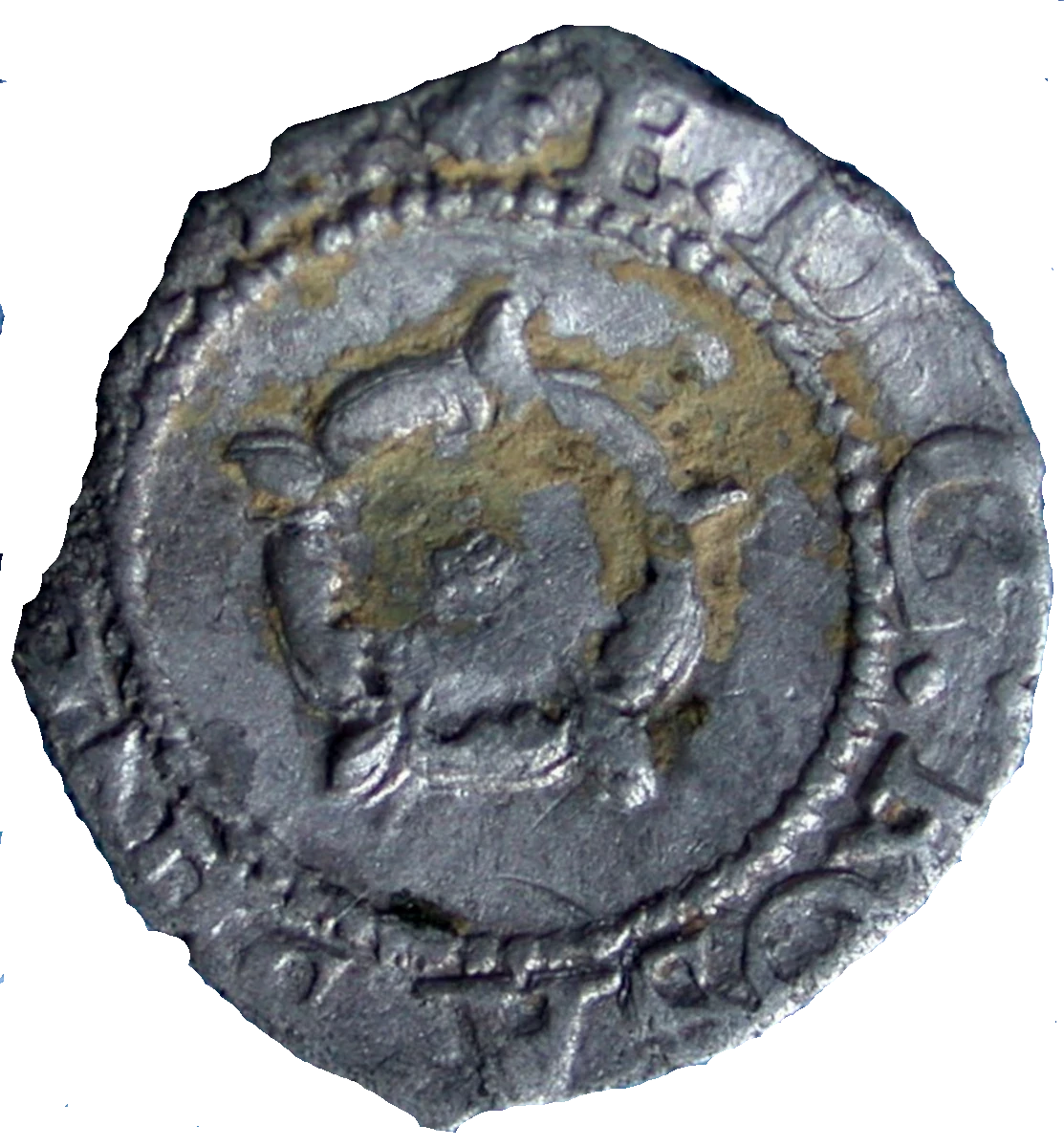
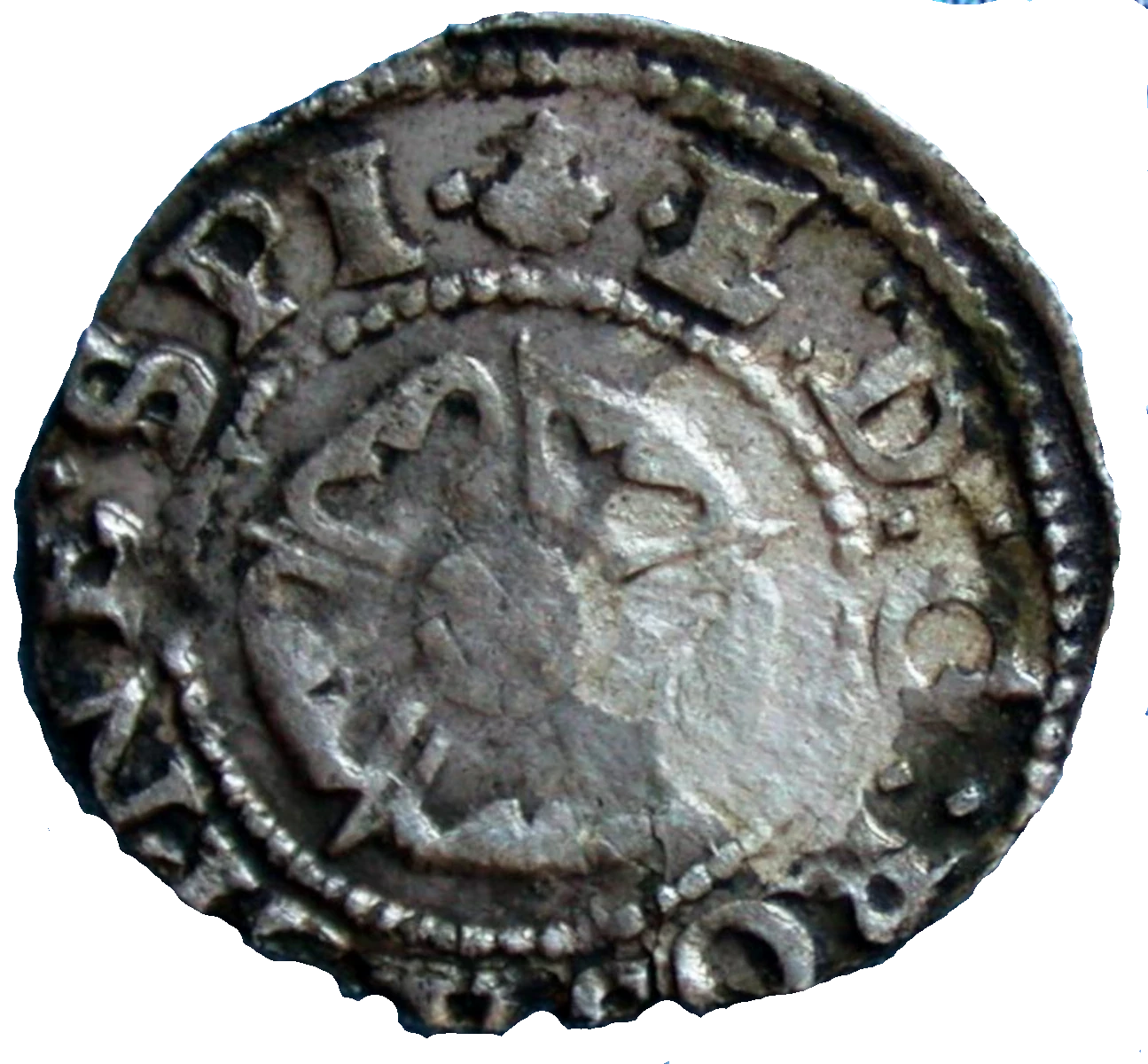
- Obverse: Portcullis
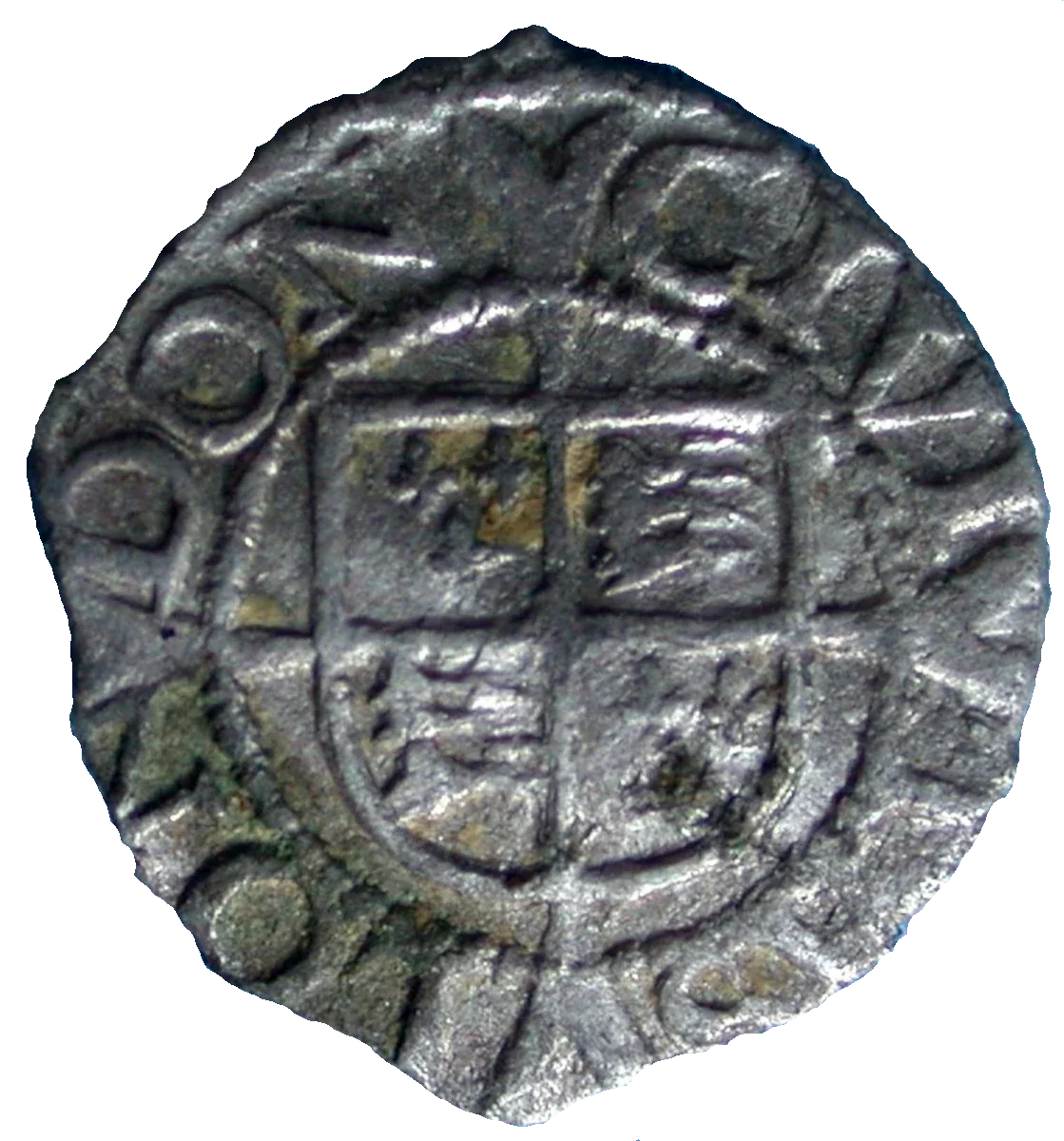
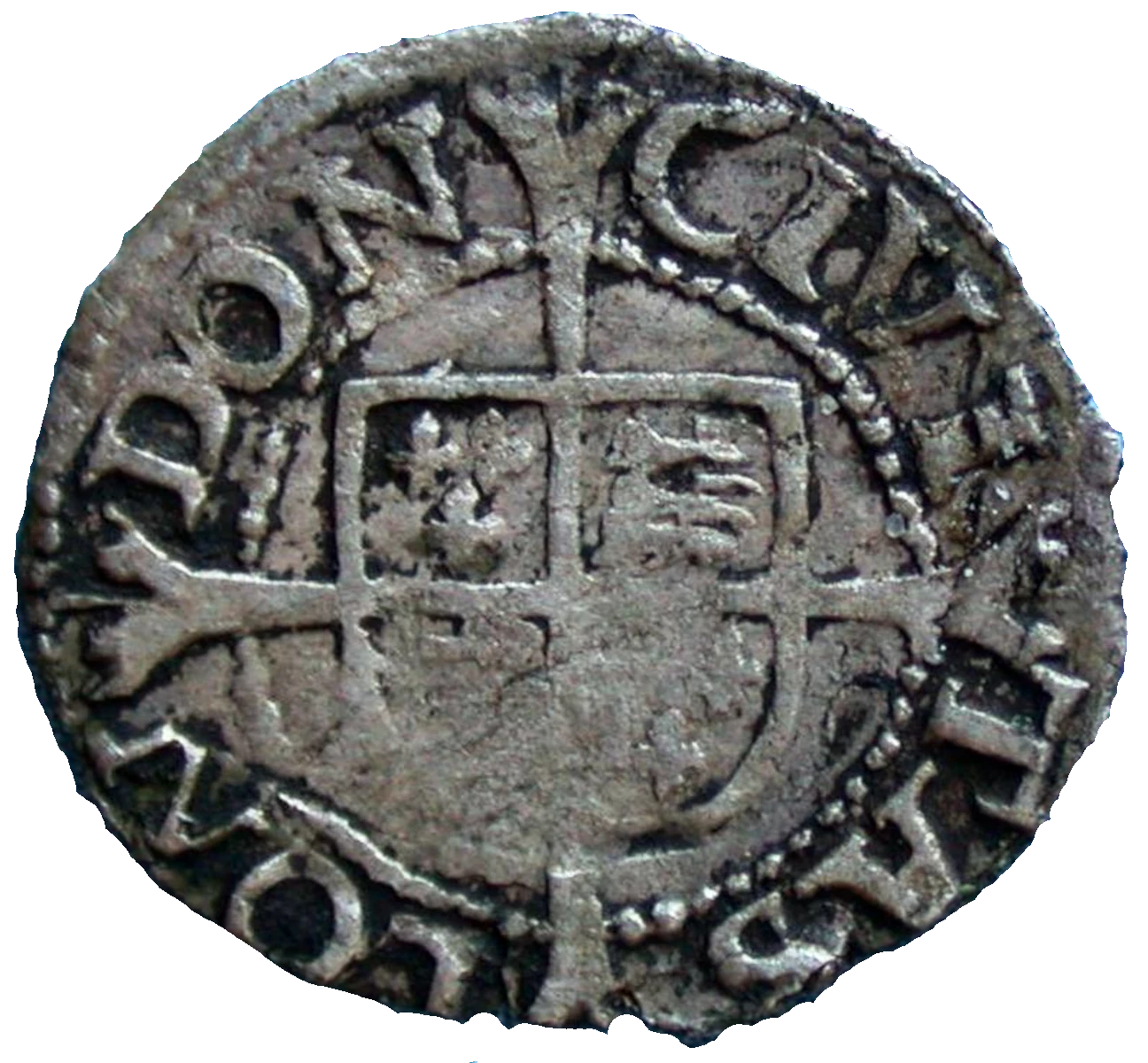
- Reverse: Long cross with forked ends and 3 pellets in each quarter
- Coin diameter: 11mm
- Inner circle diameter: 8mm (reverse only)
- Weight: 0.19g
Coin Examples
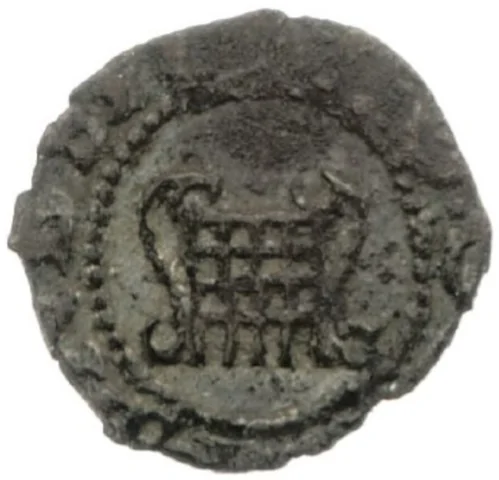
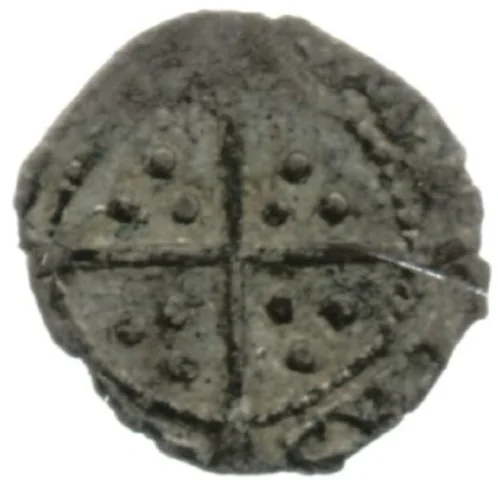
Year(s): 1551-3
Mint: London
Type/Class: 1.1a
Obverse: [E·] D· G [ROS]A SINE SPI around a Portcullis
3
.
Legend translated:
Edward by the Grace of God, a Rose without a thorn
Reverse: CIVITAS [LONDON] "Long Cross" pattée with three pellets in each quarter.
Dies: 1.1/A
Reference(s): S.2487A, North 1948 (although mis-classified as Base Silver Issue), Withers 1/a
Scarcity: One known
Image copyright: © The Trustees of the British Museum. Shared under a Creative Commons Attribution-NonCommercial-ShareAlike 4.0 International (CC BY-NC-SA 4.0) licence(opens in a new tab)
Guide Price: £1500 (Fine) £5250 (Very Fine)
Coin Characteristics: Third Period - Very Base Issue
- Metal: Silver
- Denomination: Devalued Halfpenny (½ penny) used as a Farthing (¼ penny) 4
- Mint(s): London
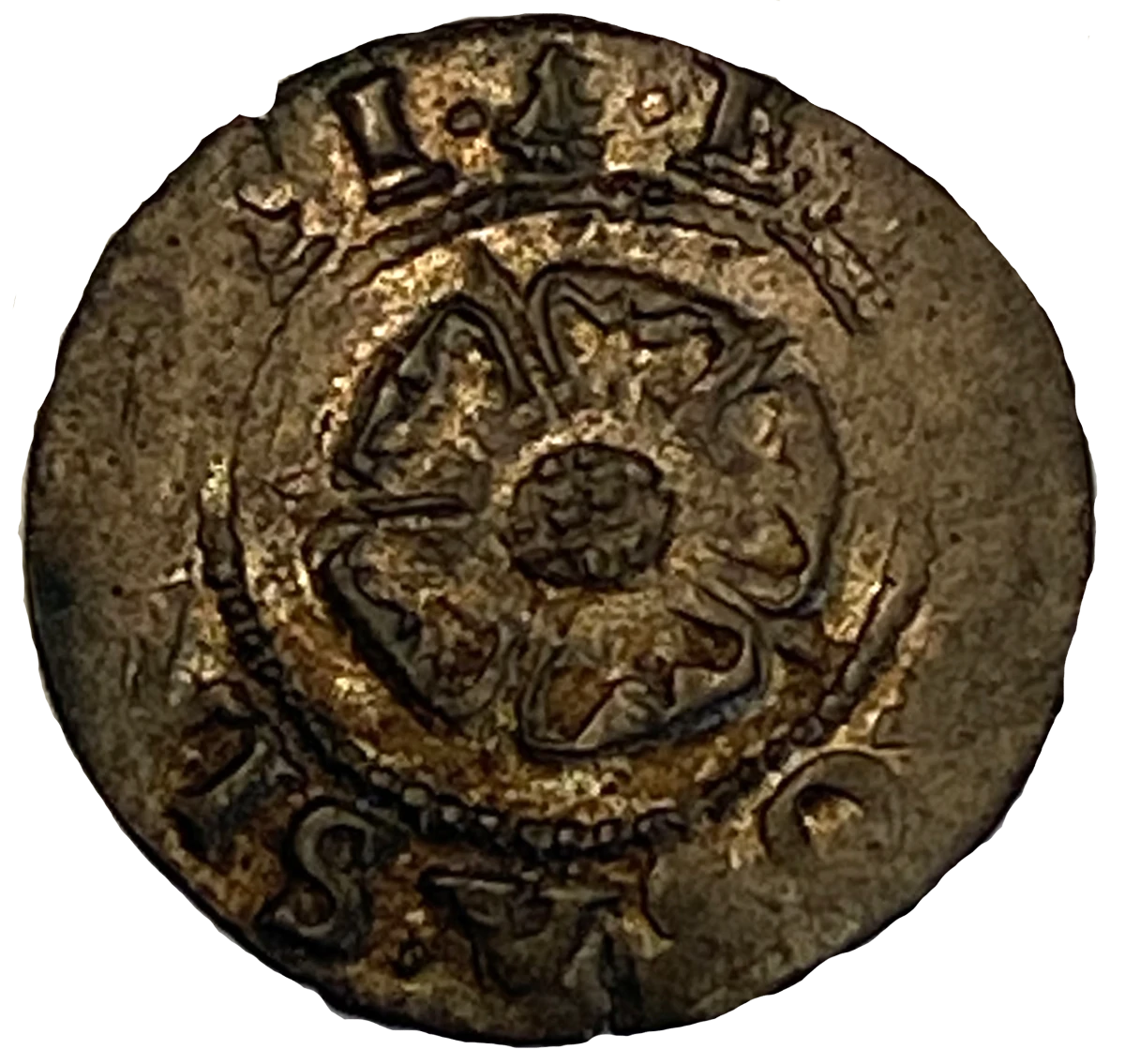
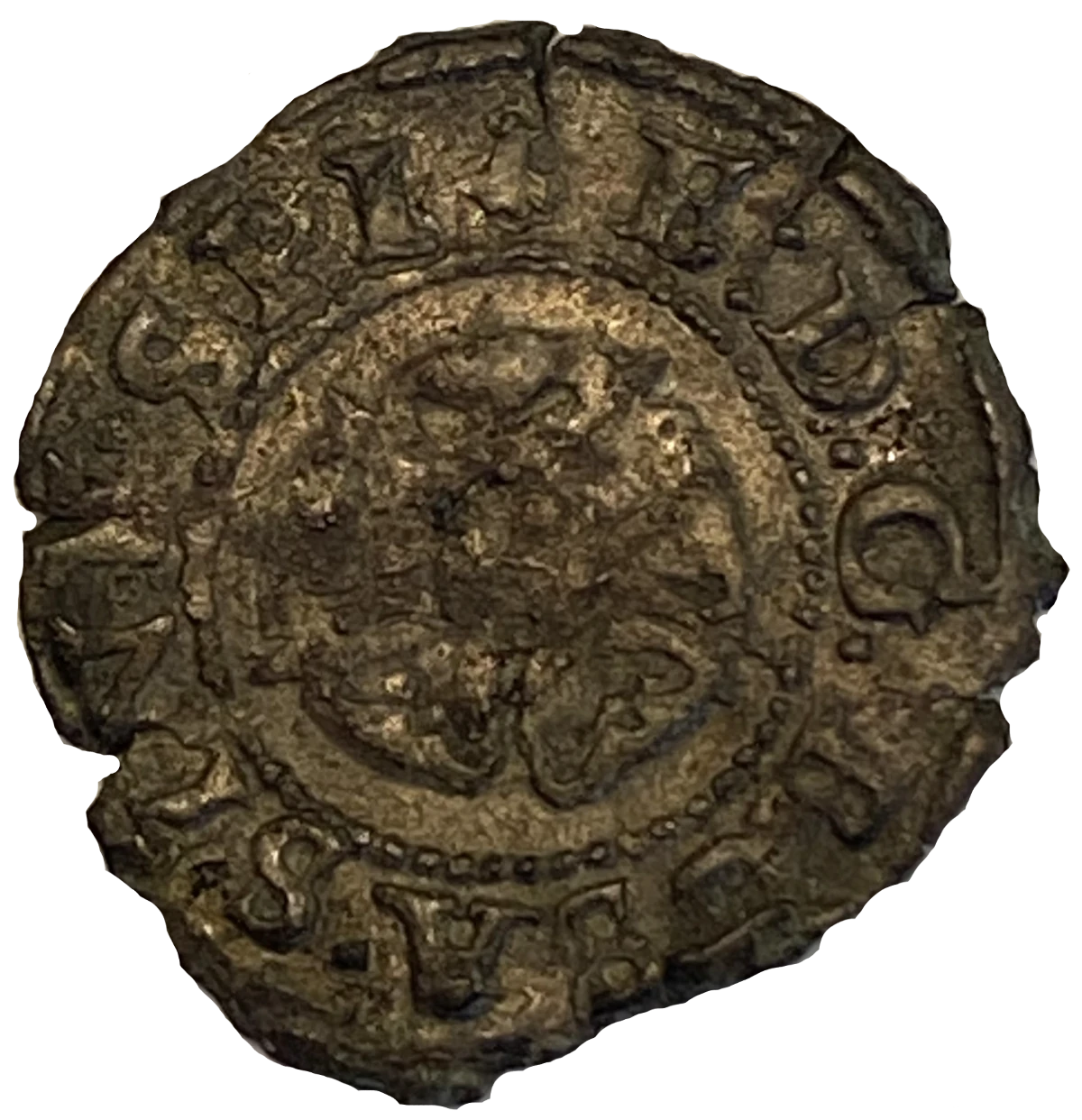
- Obverse: Two distinct types: Single petal rose or Large single petal rose
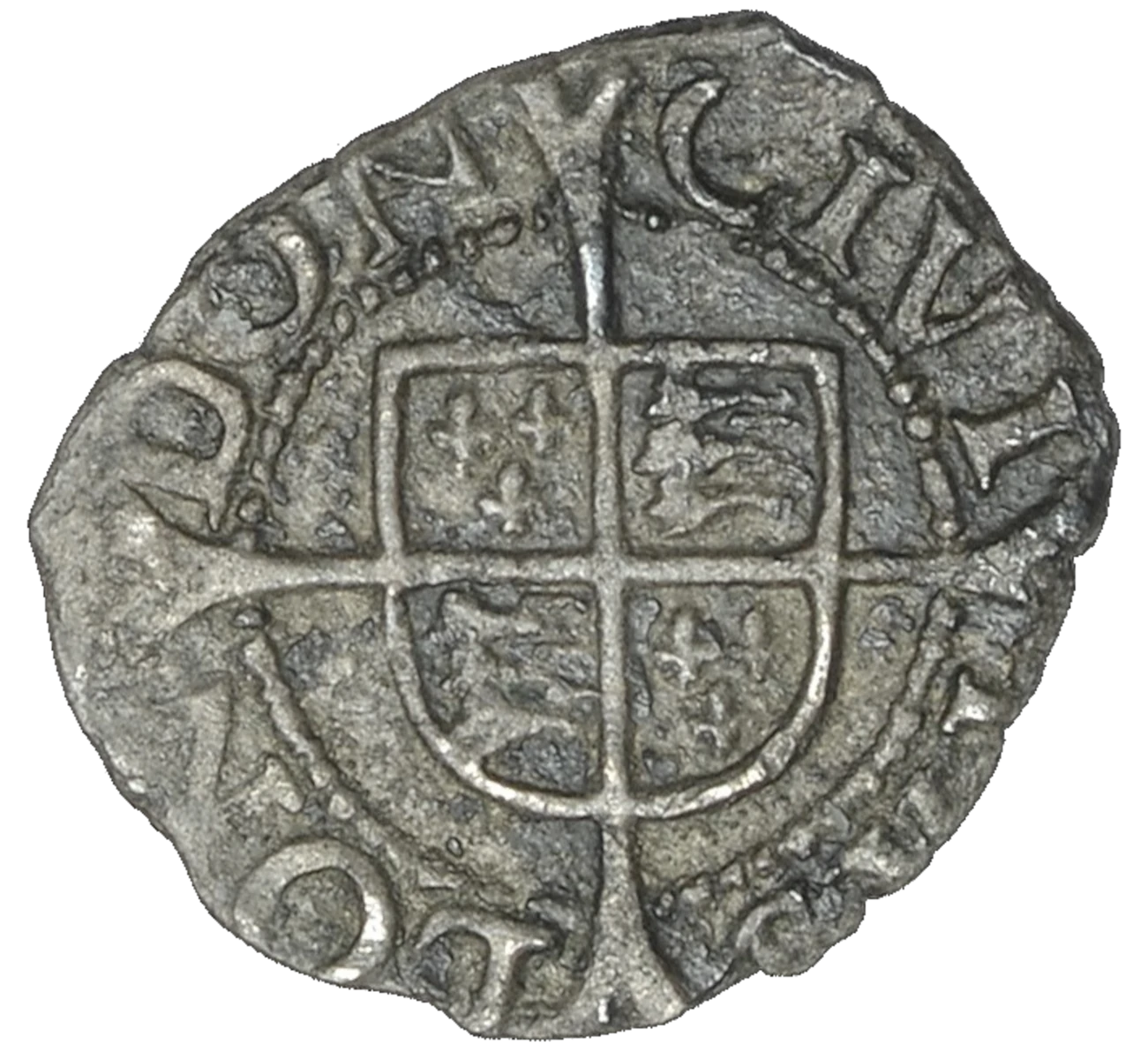
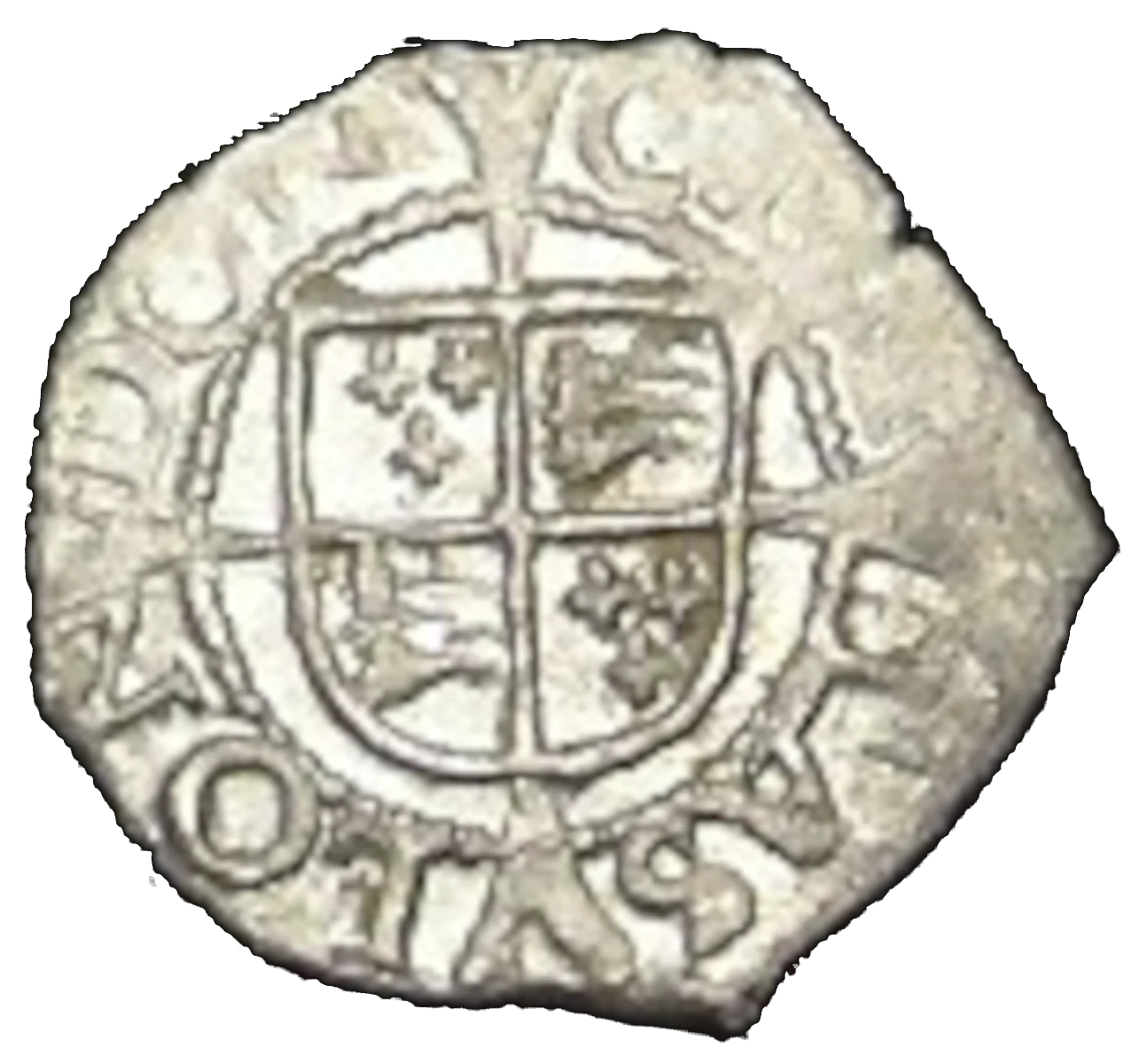
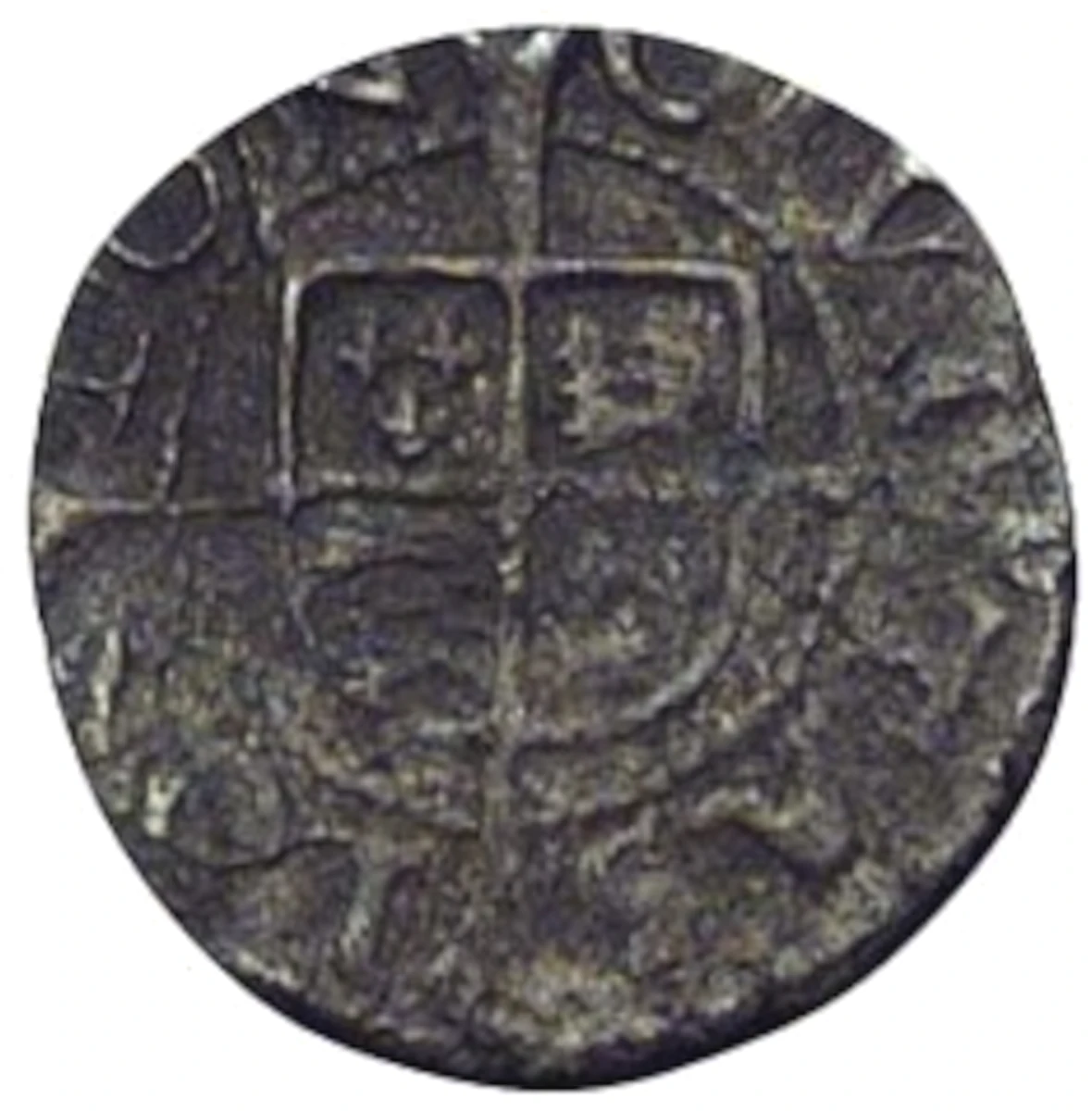
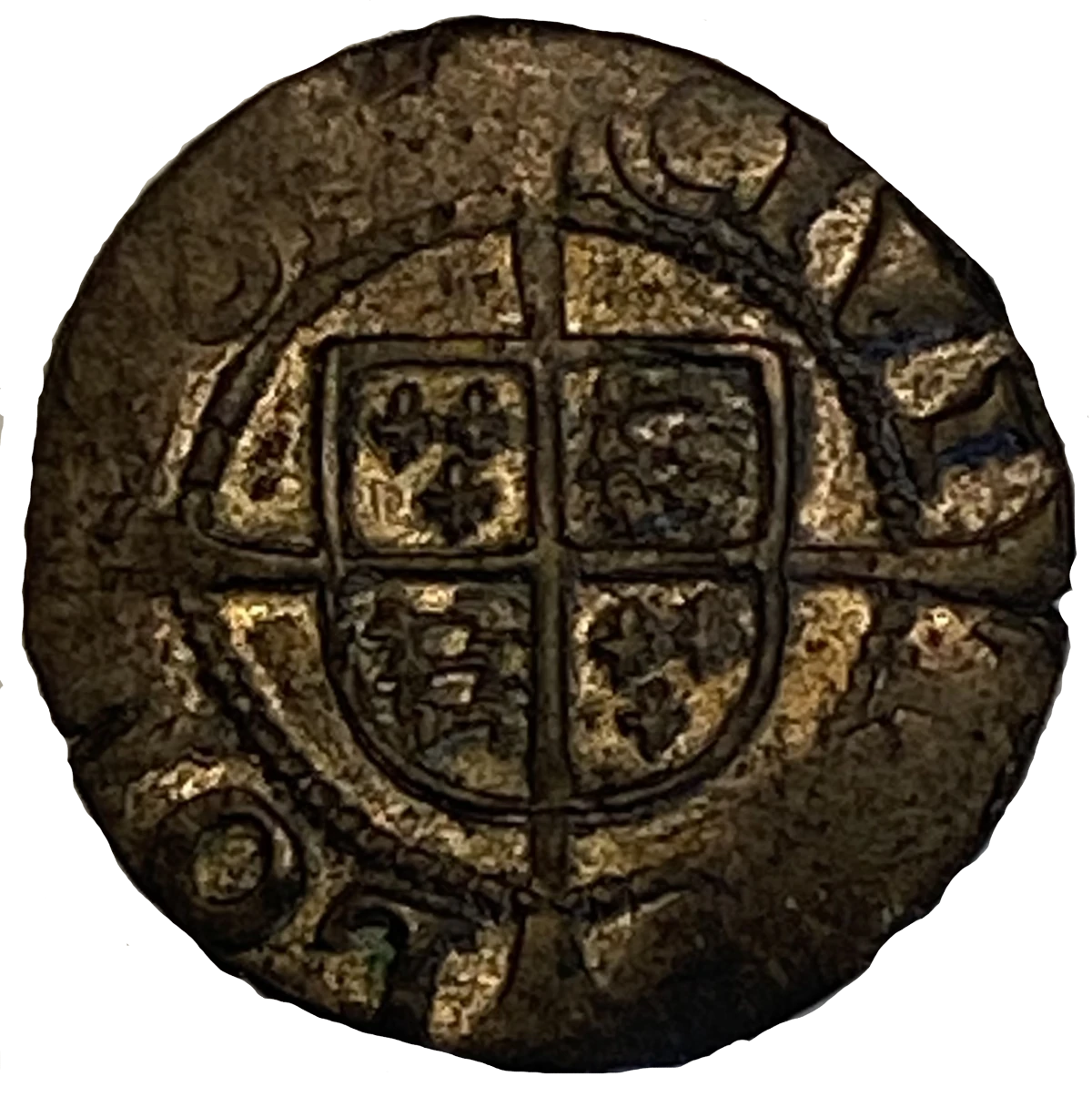
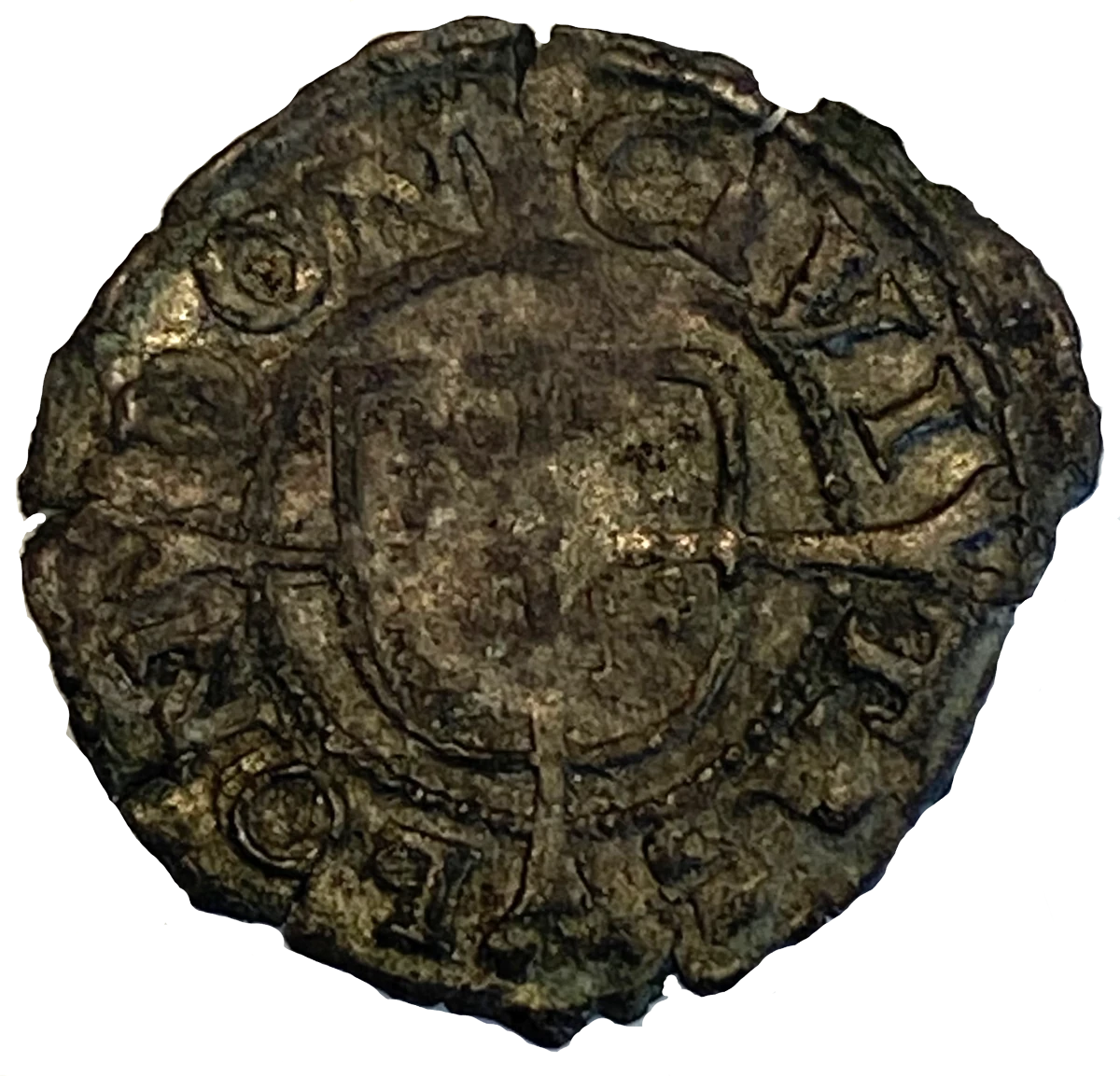
- Reverse: Shield over long cross
- Coin Diameter: 11mm
- Inner Circle Diameter: 8mm
- Weight: 0.37g
Coin Examples: "Small" Single Petal Rose
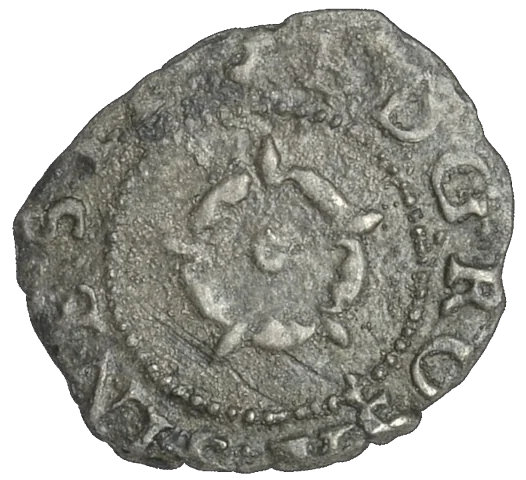
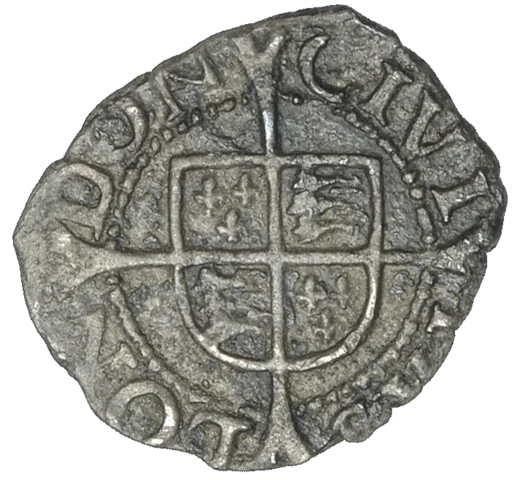
Year(s): 1551
Mint: London
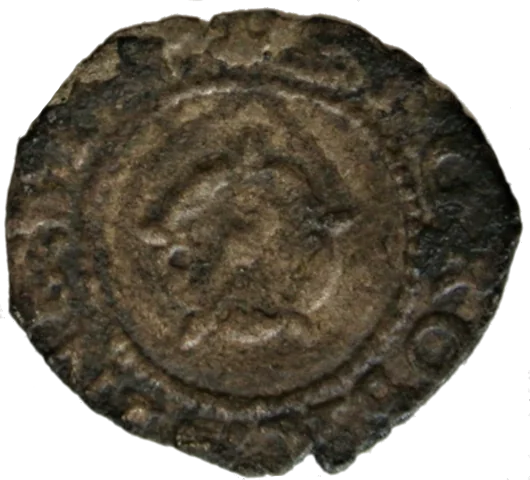
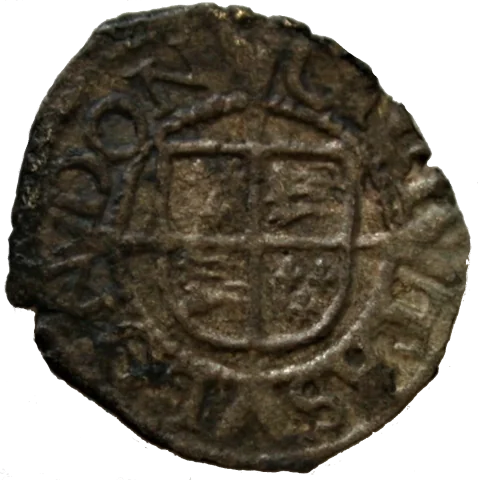
Obverse: i.m. Scallop followed by: E:D:G:ROSA:SINE:SPI. around a single petal Rose. Legend translated: Edward by the Grace of God, a Rose without a thorn
Reverse: CIVITAS LONDON "Long Cross" pattée over the English Coat of Arms
Dies: 2.1/A
Reference(s): Whitton V 2c, S.2476, North 1947, SCBC 2476.
Scarcity: Two known
Guide Price: £450 (Fine) £1750 (Very Fine)
Year(s): 1551
Mint: London
Obverse: i.m. Scallop followed by: [E]D G.[ROSA].SIN[E SPI] around a single petal Rose. Legend translated: Edward by the Grace of God, a Rose without a thorn
Reverse: CIVITAS LONDON "Long Cross" pattée over the English Coat of Arms
Dies: 2.1/B
Reference(s): Whitton V 2c, S.2476, North 1947, SCBC 2476.
Scarcity: Three known
Guide Price: £450 (Fine) £1750 (Very Fine)
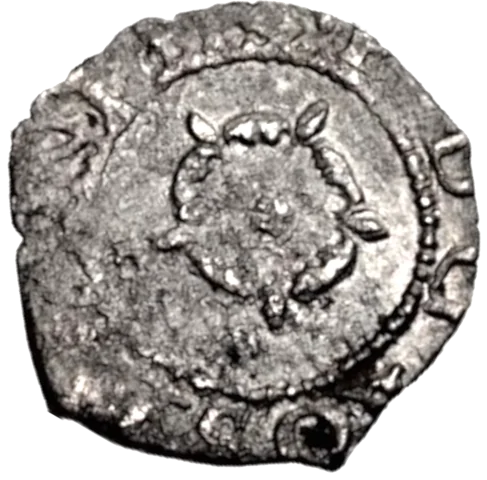
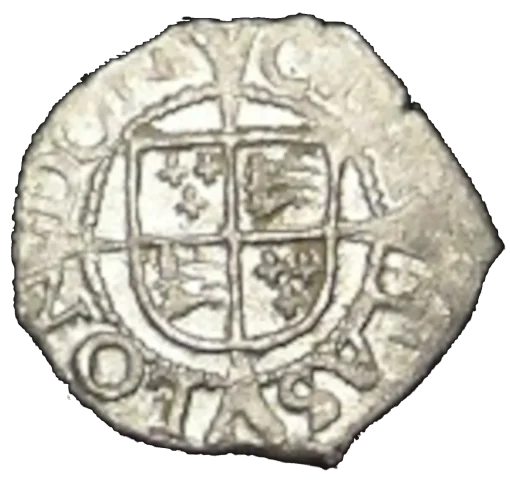
Year(s): 1551
Mint: London
Obverse: i.m. Scallop followed by: ·E D G [ROSA SINE] SPI. around a single petal Rose. Legend translated: Edward by the Grace of God, a Rose without a thorn
Reverse: CIVITAS LONDON "Long Cross" pattée over the English Coat of Arms
Dies: 2.2/B
Reference(s): Whitton V 2c, S.2476, North 1947, SCBC 2476.
Scarcity: One known
Guide Price: £450 (Fine) £1750 (Very Fine)
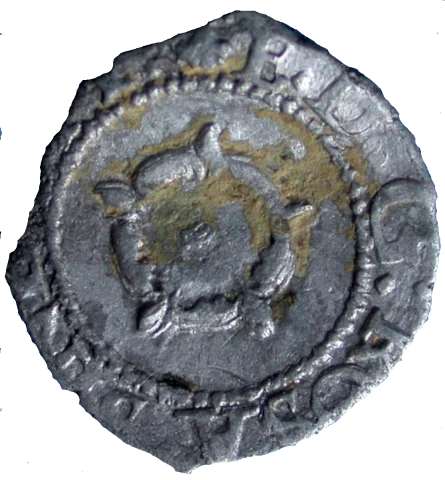
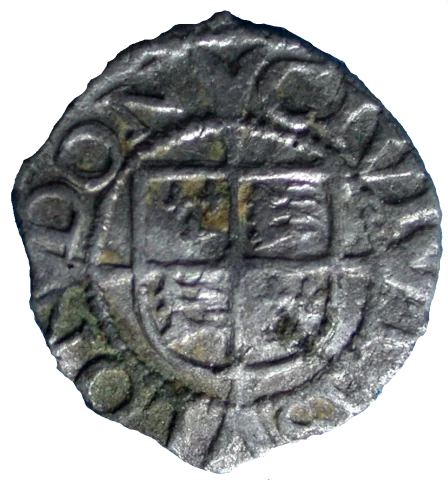
Year(s): 1551
Mint: London
Obverse: i.m. Scallop followed by: E.D[]G:ROSA.SIN[E SPI]. around a single petal Rose. Legend translated: Edward by the Grace of God, a Rose without a thorn
Reverse: CIVITAS LONDON "Long Cross" pattée over the English Coat of Arms
Dies: 2.3/B
Reference(s): Whitton V 2c, S.2476, North 1947, SCBC 2476.
Scarcity: One known
Guide Price: £450 (Fine) £1750 (Very Fine)
Coin Examples: "Large" Single Petal Rose
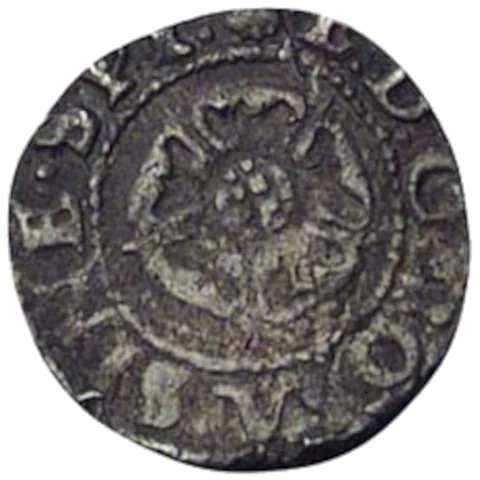
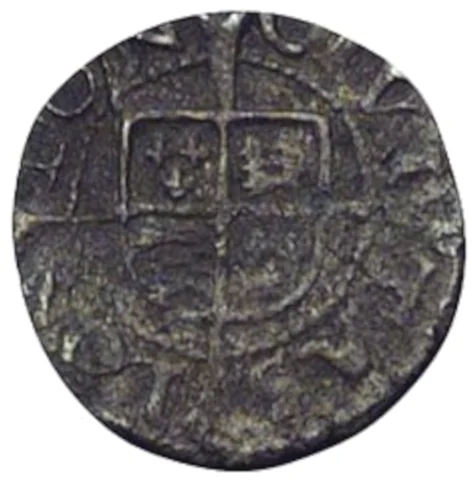
Year(s): 1551
Mint: London
Obverse: i.m. Scallop followed by: ·E:D:G:ROSA[·]SINE·SPI. around a large single petal Rose. Legend translated: Edward by the Grace of God, a Rose without a thorn
Reverse: CIVITAS LONDON "Long Cross" pattée over the English Coat of Arms
Dies: 2.4/C
Reference(s): Whitton V 2c, S.2476, North 1947, SCBC 2476.
Scarcity: Two known
Guide Price: £450 (Fine) £1750 (Very Fine)
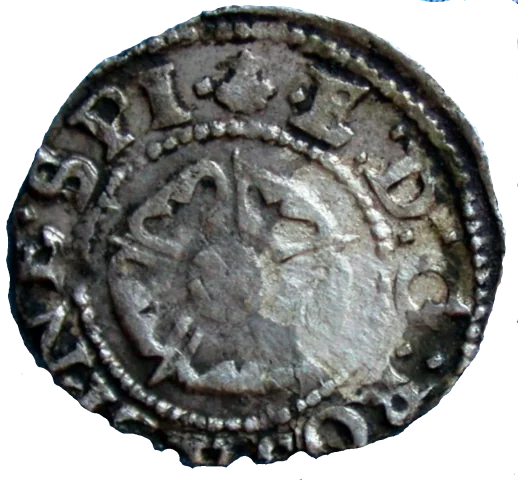
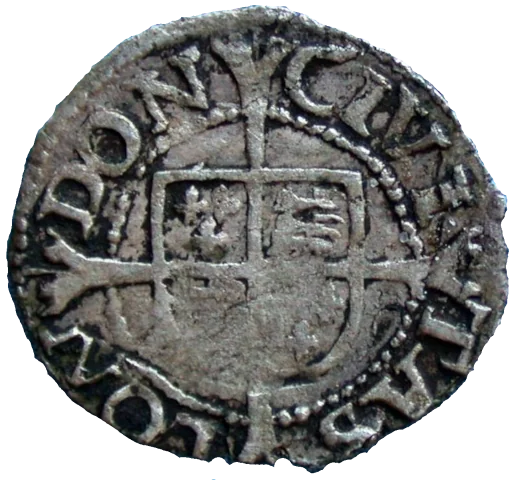
Year(s): 1551
Mint: London
Obverse: i.m. Scallop followed by: ·E:D:G:ROSA[:]SINE·SPI· around a large single petal Rose. Legend translated: Edward by the Grace of God, a Rose without a thorn
Reverse: CIVITAS LONDON "Long Cross" pattée over the English Coat of Arms
Dies: 2.5/D
Reference(s): Whitton V 2c, S.2476, North 1947, SCBC 2476.
Scarcity: One known
Guide Price: £450 (Fine) £1750 (Very Fine)
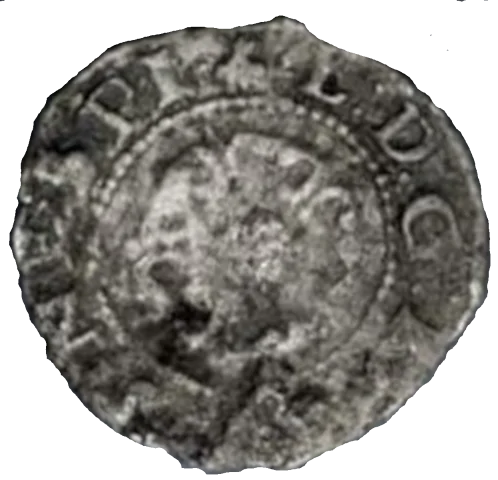
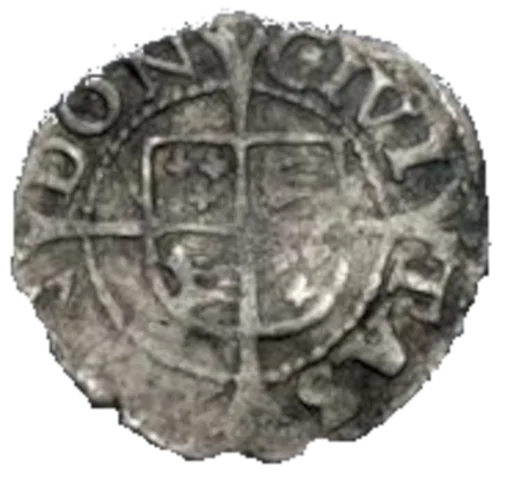
Year(s): 1551
Mint: London
Obverse: i.m. Scallop followed by: ·E:D:G:ROSA[:]SINE·SPI· around a large single petal Rose. Legend translated: Edward by the Grace of God, a Rose without a thorn
Reverse: CIVITAS LONDON "Long Cross" pattée over the English Coat of Arms
Dies: 2.6/E
Reference(s): Whitton V 2c, S.2476, North 1947, SCBC 2476.
Scarcity: One known
Guide Price: £450 (Fine) £1750 (Very Fine)
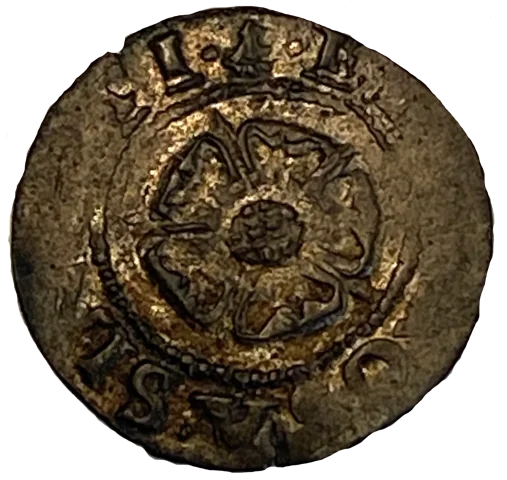
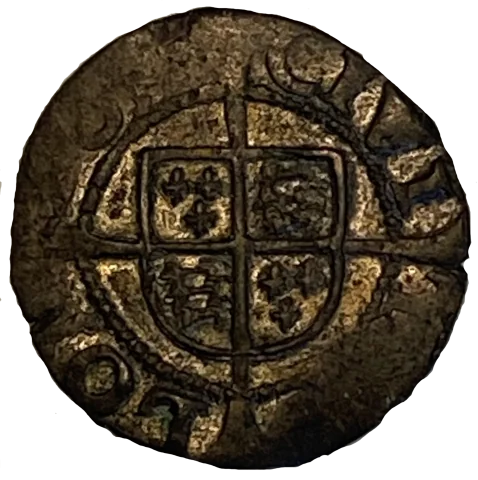
Year(s): 1551
Mint: London
Obverse: i.m. Scallop followed by: ·E:[D:G: R]OSA SIN[E·S]PI· around a large single petal Rose. Legend translated: Edward by the Grace of God, a Rose without a thorn
Reverse: CIVITAS LONDON "Long Cross" pattée over the English Coat of Arms
Dies: 2.6/F
Reference(s): Whitton V 2c, S.2476, North 1947, SCBC 2476.
Scarcity: One known
Guide Price: £450 (Fine) £1750 (Very Fine)
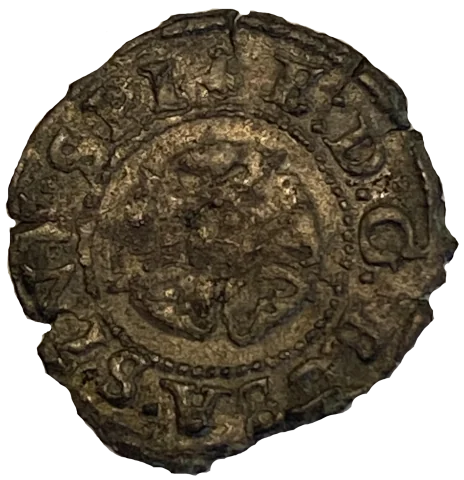
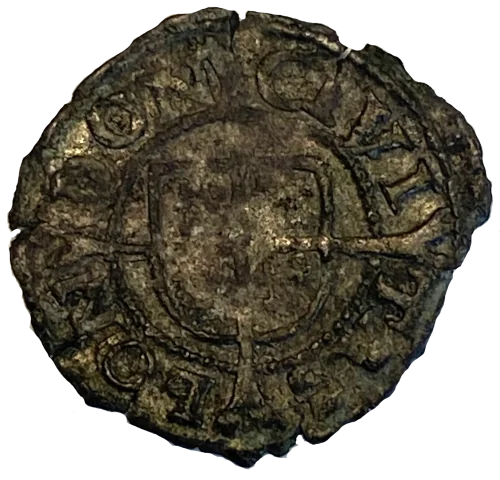
Year(s): 1551
Mint: London
Obverse: i.m. Scallop followed by: E:D:G. ROSA· SINE:SPI around a large single petal Rose. Legend translated: Edward by the Grace of God, a Rose without a thorn
Reverse: CIVITAS LONDON "Long Cross" pattée over the English Coat of Arms
Dies: 2.7/G
Reference(s): Whitton V 2c, S.2476, North 1947, SCBC 2476.
Scarcity: One known
Guide Price: £450 (Fine) £1750 (Very Fine)
Corpus of Coins
Abbreviations
- BM — British Museum
- Fitz. — Fitzwilliam Museum
- PC — Private Collections
- wnr — weight not recorded
1.1a
[E·] D· G [ROS]A SINE SPI / CIVITAS LONDON
2.1a
E:D:G:ROSA:SINE:SPI. / CIVITAS LONDON
3 PC; Spink, Coins of England, No. 2476 (plate coin); wnr.
2.1b
E:D:G:ROSA:SINE:SPI· / CIVITAS LONDON
5 PC; ex. Shuttleworth > Spink > Stewartby, Spink Sale 243, 28 March 2017; 0.53g.
6 PC; ex. Michael Trenerry, FPL February 2014, item J136 > Cattermole (Withers plate coin 3/a); wnr.
7 PC; ex. Wheeler, Sotheby 12 March 1930, lot 329 (part) > Ryan (Part 2), Glendining 22 January 1952, lot 1002; wnr.
8 BM; ex. Rogers; 0.39g/2h.
2.2b
·E D G [ROSA SINE] SPI. / CIVITAS LONDON
2.3b
E.D[]G:ROSA.SIN[E SPI]. / CIVITAS LONDON
2.4c
·E:D:G:ROSA[·]SINE·SPI. / CIVITAS LONDON
12* PC; ex. Shepherd (I), Sotheby 22 July 1885, lot 253 > Montagu, Sotheby 7 May 1888, lot 206 > Montagu (Part 2), Sotheby 11 May 1896, lot 855 (bt. Spink) > Murdoch (Part 1), Sotheby 31 March 1903, lot 529 > Bliss (Part 1), Sotheby 22 March 1916, lot 279 (bt. Spink) > Lockett (English Part 2), Glendining 11 October 1956, lot 1921 > Shuttlewood, Spink Sale 151, 15 March 2001, lot 264 > CNG, Sale 118, 13 September 2021, lot 1373; 0.39g/1h.
2.5d
·E:D:G:ROSA[:]SINE·SPI· / CIVITAS LONDON
2.6e
·E:D:G:[ROSA]SINE·SPI· / CIVITAS LONDON
2.6f
·E:[D:G: R]OSA SIN[E·S]PI· / CIVITAS LONDON
2.7g
E:D:G. ROSA· SINE:SPI / CIVITAS LONDON
Footnotes
- Bispham, J. "The Base Silver Shillings of Edward VI." The British Numismatic Journal 55 (1985): 139. link(opens in a new tab) ↩
- Morrieson, H. W. "The Silver Coins of Edward VI." The British Numismatic Journal 12 (1916): 137-80 .link(opens in a new tab) ↩
- Attribution of this coin, including a complete obverse legend, is based on an entry and an illustration in Folkes, Martin. Tables of English Silver and Gold Coins. 2nd ed. London: Society of Antiquaries, 1745, 45, pl. ix, no. 18. The only known example, in the British Museum, only has a partial obverse legend visible. ↩
- The 'Very Base Issue' halfpence had so little silver in them that they were instead used as farthings. It was recorded in the King Edward's Journal on August 18, 1551, that the value of the base coin was further diminished: "The shilling fell from nine pence to six pence, the groat from three pence to two pence, the twopence to a penny, the penny to a halfpenny, the halfpenny to a farthing". ↩
Research & Resources
Contact
For corrections, additional examples, or research enquiries, please email:
admin@hammeredfarthings.co.uk
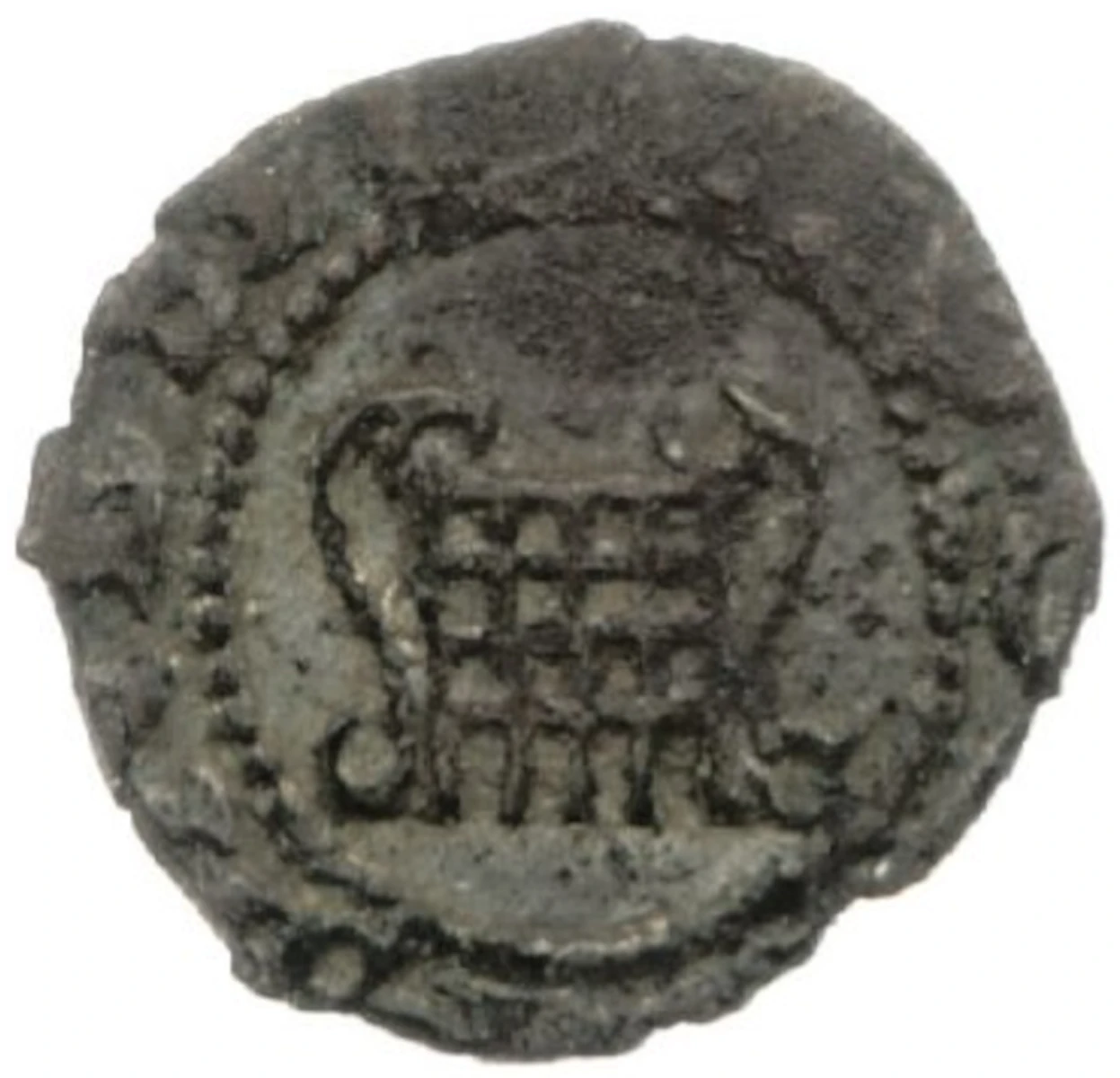
Third Period Fine Silver - Obverse 1.1
© The Trustees of the British Museum
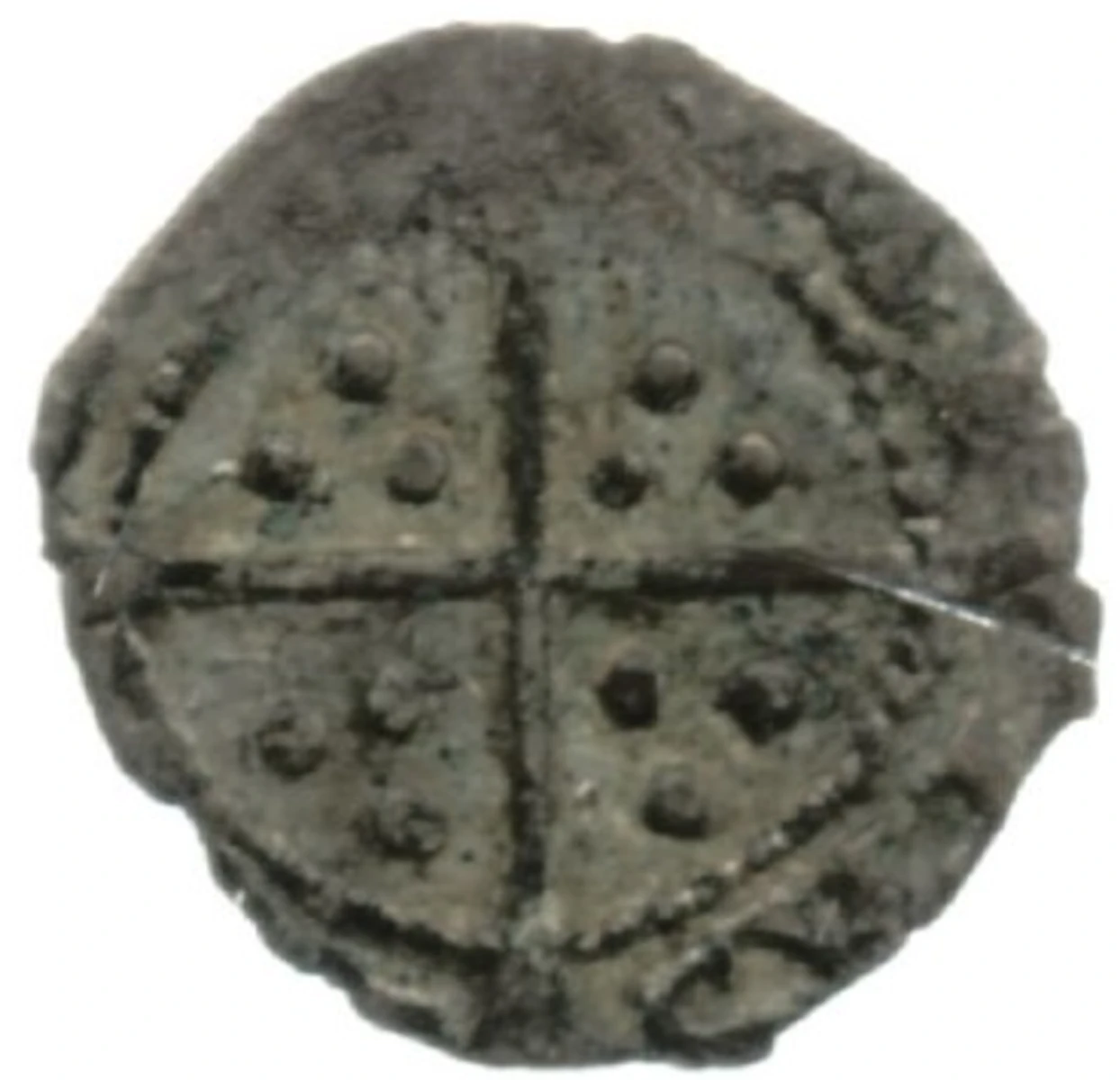
Third Period Fine Silver - Reverse A
© The Trustees of the British Museum
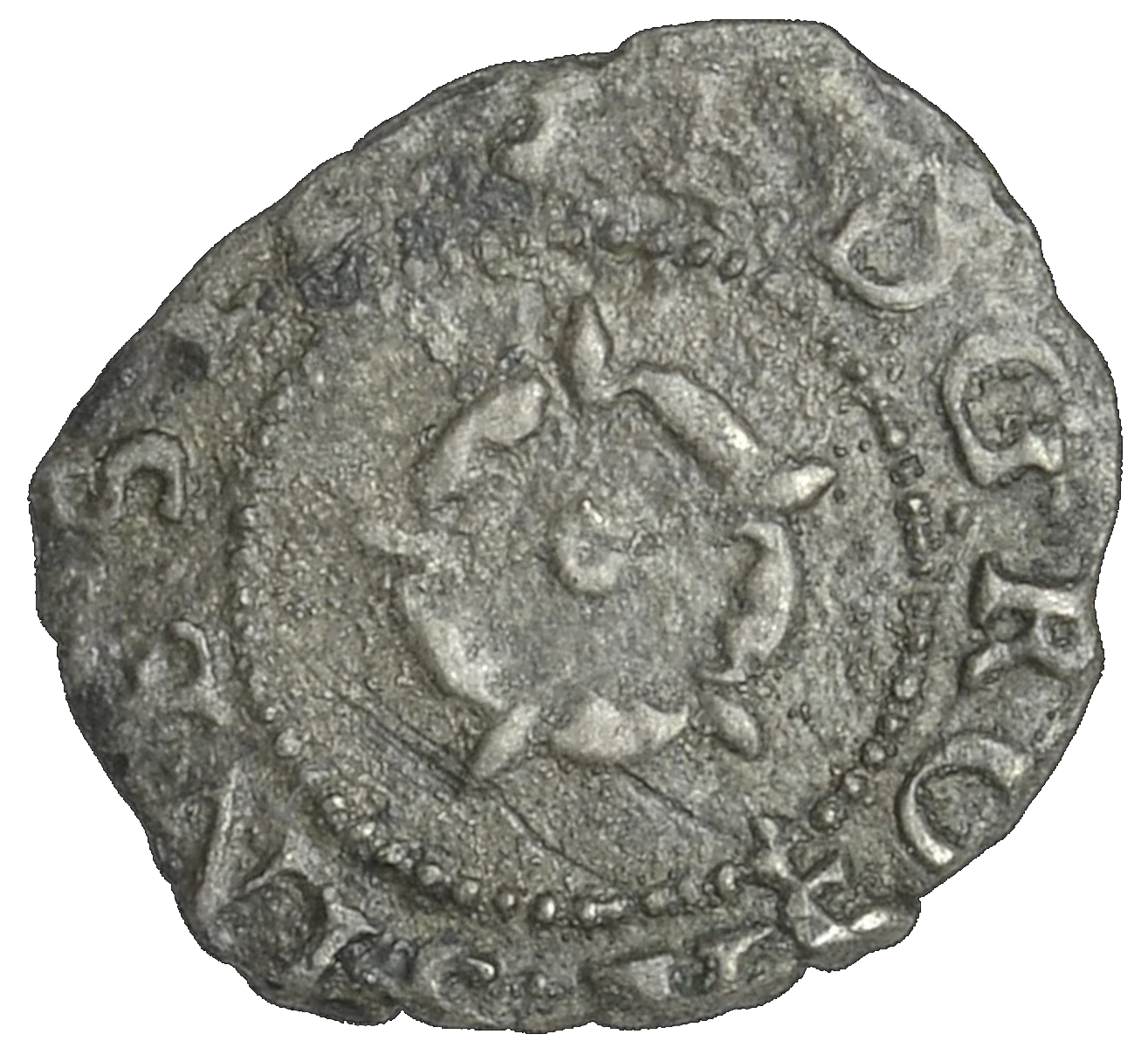
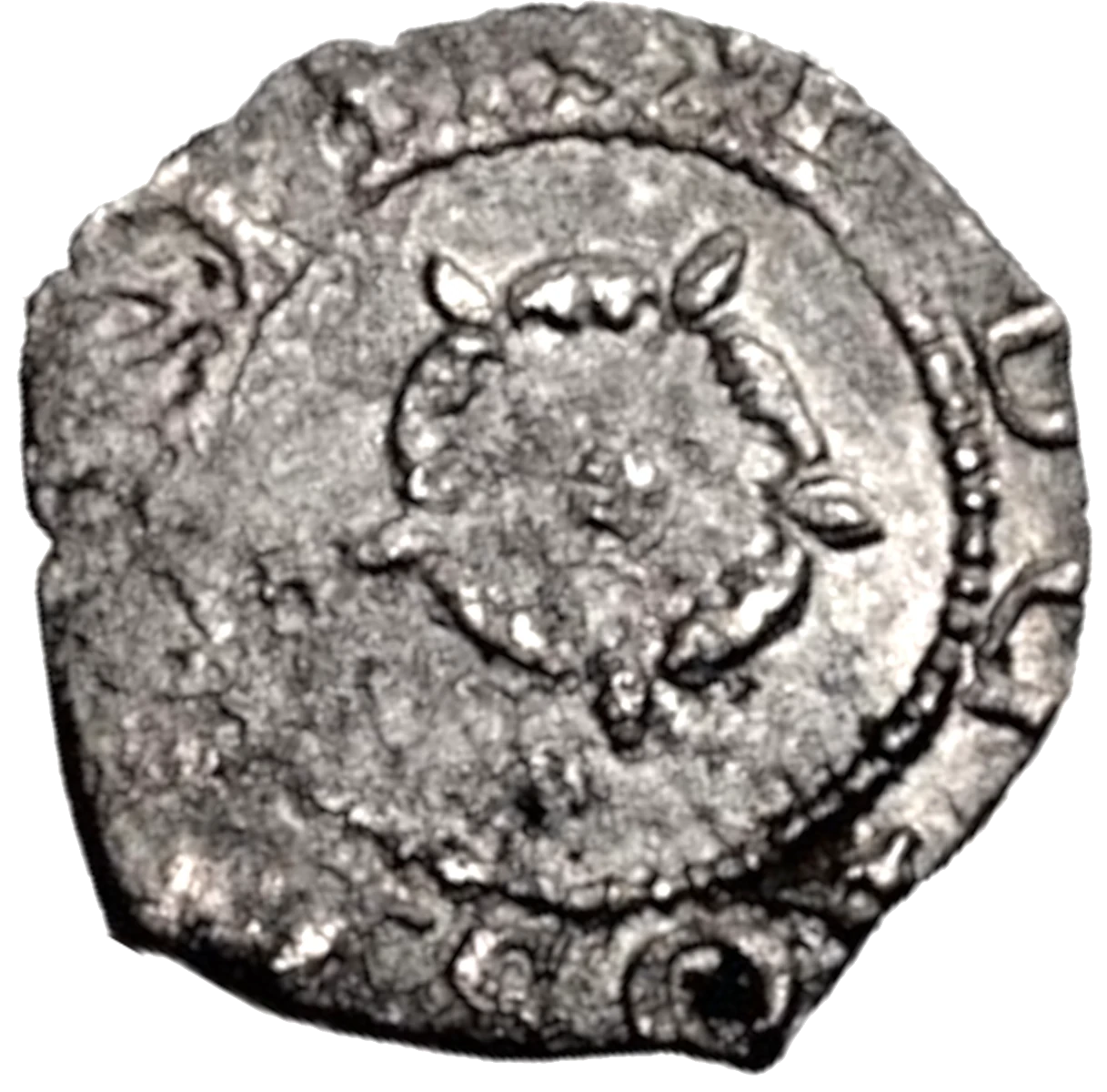
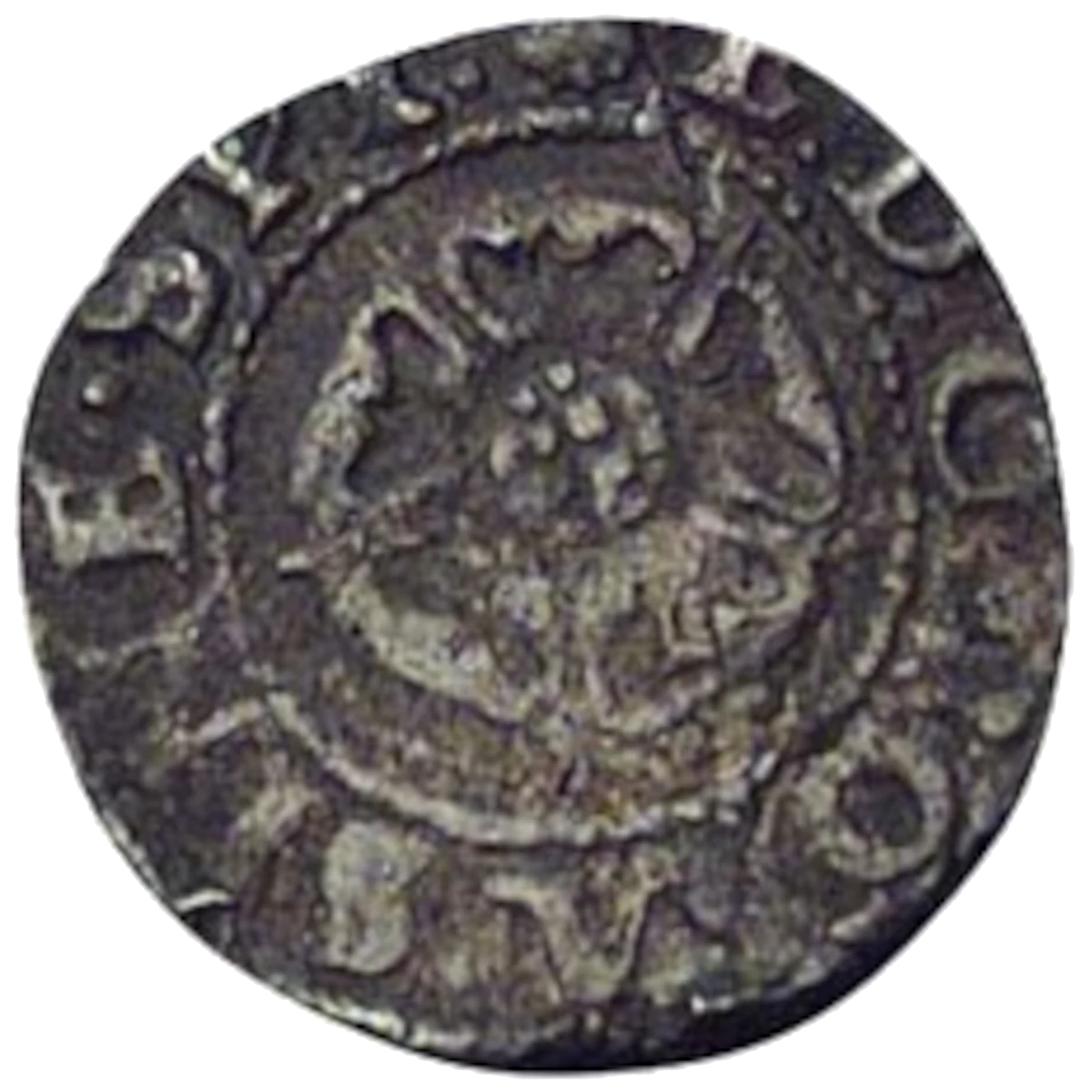
Third Period Very Base Issue - Obverse 2.6
© The Trustees of the British Museum
Third Period Very Base Issue - Reverse F
© The Trustees of the British Museum
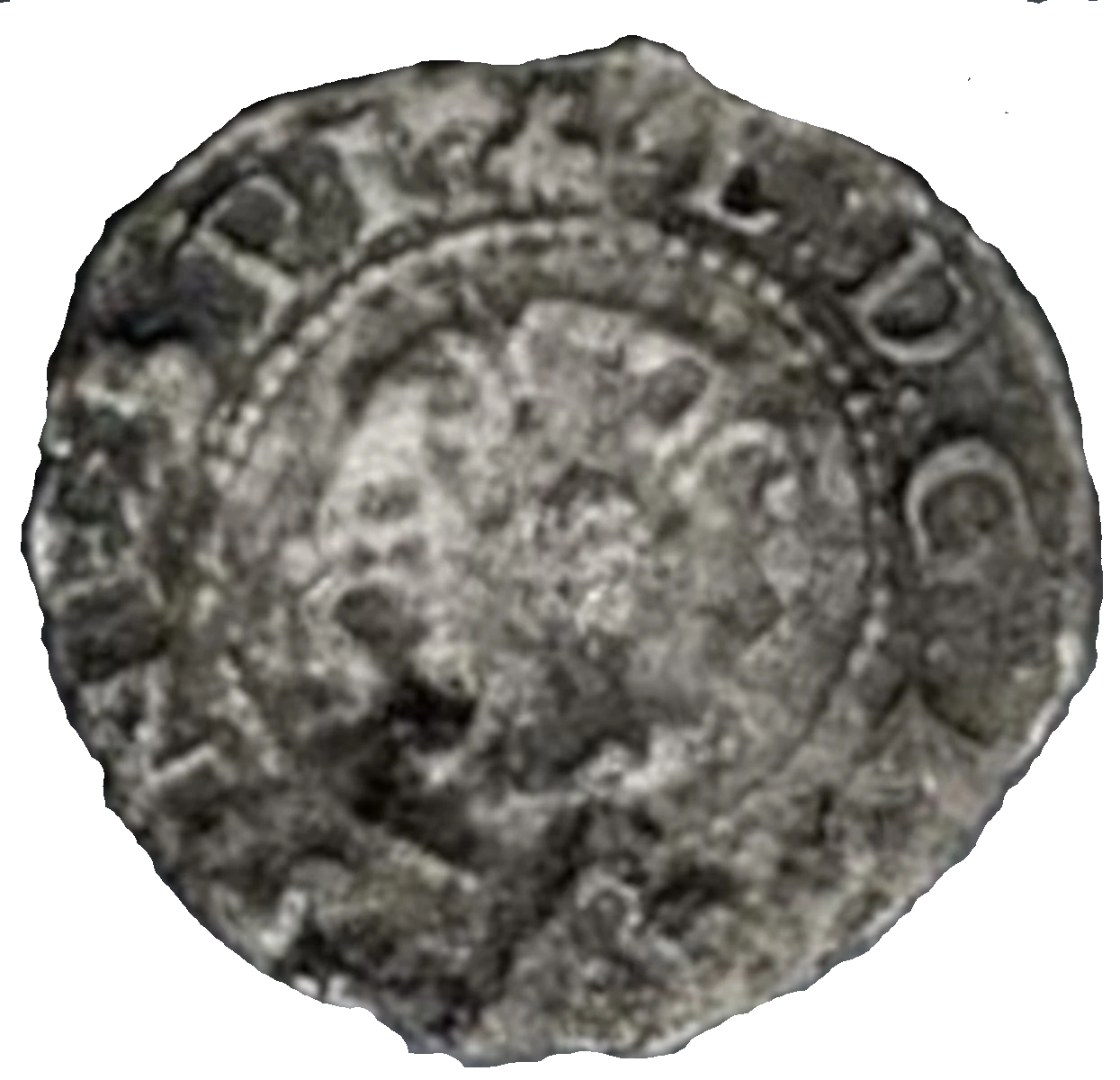
Third Period Very Base Issue - Obverse 2.7
© The Trustees of the British Museum
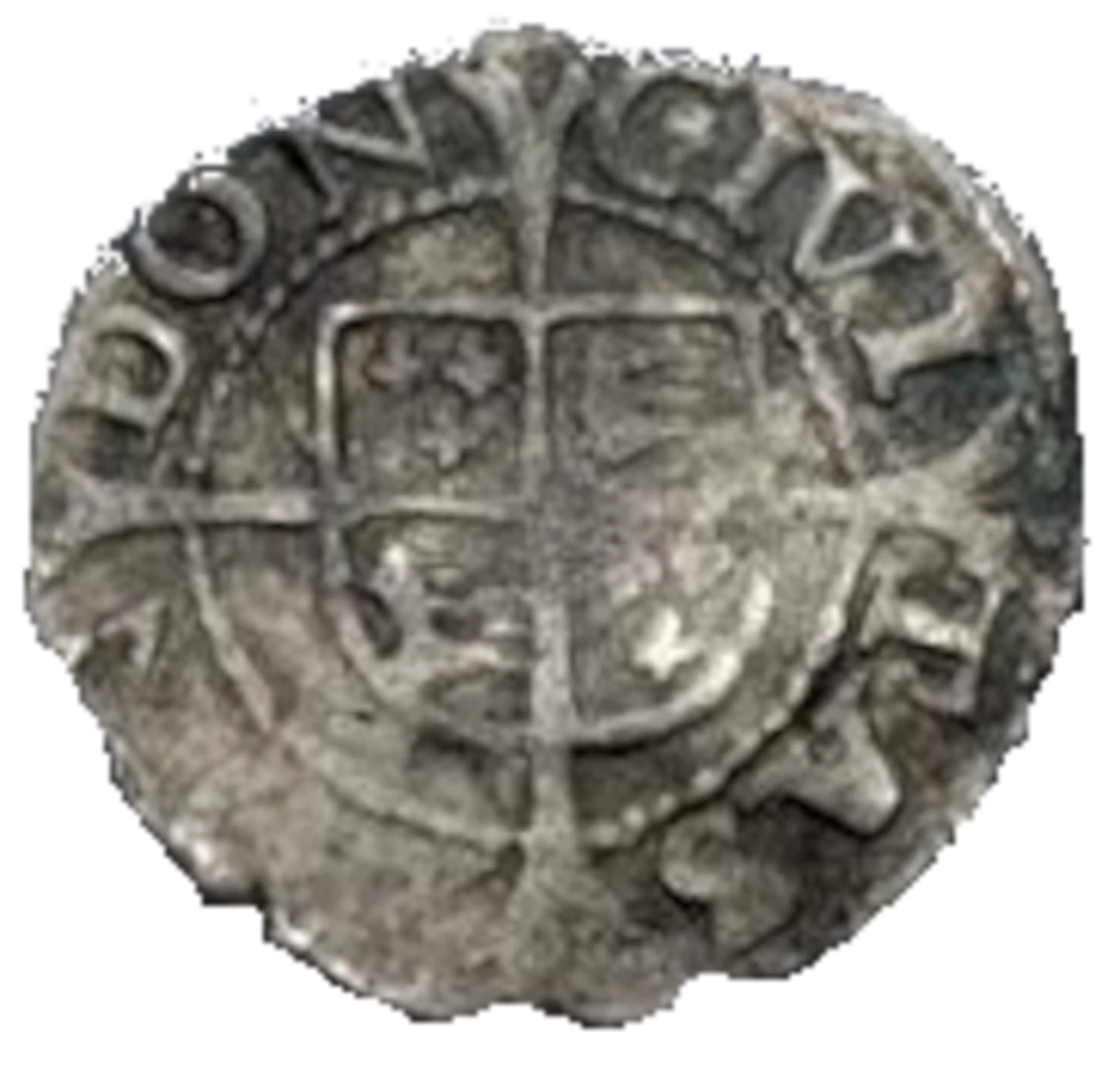
Third Period Very Base Issue - Reverse G
© The Trustees of the British Museum