English Mints producing Farthings between 1190-1553
Based on historical mint locations listed on the classic Hammered-Farthings.co.uk reference site, this map shows the principal English mints that produced farthings during the medieval period.
Mint Locations
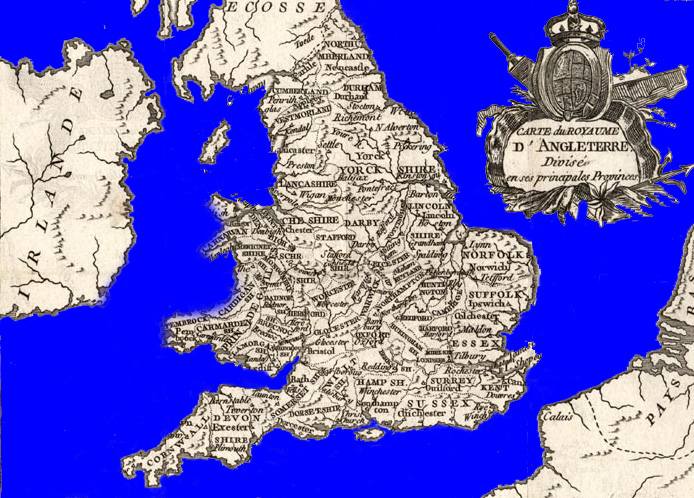
Known Mints
Notes on Usage
Not all of these mints produced farthings in every reign they were active — some struck farthings only during specific reigns or for short periods. Individual mint pages or ruler-specific farthing pages should be consulted for details on issues and varieties associated with each location.
Berwick Mint
1296: Edward I set up his own mint in Berwick after the town was captured and sacked by the English.
1297: Berwick was recaptured by the Scots at the Battle of Sterling Bridge the following year, but the English held the castle and continued minting coins to pay the soldiers. The town was eventually evacuated by the Scots in 1298 and remained in English control until 1318.
1333: Edward III recaptured the town following the battle of Halidon Hill and held it throughout his reign (except briefly in 1355).
All English farthings struck at Berwick, except Class 5 were struck from locally produced dies.
- Farthing production: 1296-1318 and 1335-44
- Active reigns: Edward I, II and III
Bristol Mint
As part of Edward I's great recoinage of 1279, Bristol was not one of the cities initially granted a mint. Subsequently a mint was opened early in 1280 to relieve the overworked London mint and to facilitate the exchange of new money. The Royal Warders sent £2000 from London to set up a mint there. The mint closed a year later.
1281: The mint closed.
1300: THe Bristol mint was reopened but no longer produced farthings.
- Farthing production: 1280-81
- Active reigns: Edward I
Calais Mint
Commencing with Henry IV's victory over the French at Agincourt, Calais served as a vital English exclave and parliamentary borough from 1347 to 1558. It functioned as the primary continental staple port for the English wool trade - holding a monopoly on exporting English wool to Europe. This generated a significant tax revenue for the Crown and acting as a strategic military base.
To facilitate trade and English taxation, the Calais mint produced coins to the same standard and type as those produced in England.
- Farthing production: 1422-34
- Active reigns: Henry V and Henry VI
Canterbury
The Canterbury mint was one of several key regional, ecclesiastical mints operating during Henry VIII's reign. It produced farthings briefly, identifable by the use of a Catherine Wheel mintmark unique to this location.
- Farthing production: c.1526-1544
- Active reigns: Henry VIII
Dublin Mint
Between 1190-98 the mint at Dublin produced round farthings (as opposed to cut pennies) for Prince John, as Lord of Ireland. These Anglo-Irish round farthings pre-date the production of round farthings in England by c.90 years. When John became King of England a new type of Anglo-Irish farthing was struck between 1209-11.
No further Anglo-Irish farthings were produced at Dublin until Edward I's recoinage between 1280-84 and again between 1297-1302. An extremely brief issue of Edward III farthings was minted here in 1339.
- Farthing production: 1190-8, 1209-11, 1280-4, 1297-1302 and 1339
- Active reigns: John (as Prince and King), Edward I and Edward III
Limerick Mint
Between 1190-98 the mint at Limerick produced round farthings (as opposed to cut pennies) for Prince John, as Lord of Ireland. These Anglo-Irish round farthings pre-date the production of round farthings in England by c.90 years. When John became King of England a new type of Anglo-Irish farthing was struck here between 1209-11.
- Farthing production: 1190-8, 1209-11 and 1280-4
- Active reigns: John (as Prince and King)
Lincoln
As part of Edward I's great recoinage of 1279, Lincoln was not one of the cities initially granted a mint. Subsequently a mint was opened early in 1280 to relieve the overworked London mint and to facilitate the exchange of new money. The mint closed a year later.
- Farthing production: 1280-1
- Active reigns: Edward I
London Mint
When Edward I commenced his great recoinage in June 1279, London was the only mint producing farthings. Within the first few months it was apparent that London could not produce coins in the quantities required by such a massive undertaking, nor could a centralised London mint effectively exchange old coins from across the country. While other mints were opened during peak periods of production, the Royal mint in London was the principal English mint throughout the medieval period.
Hammered silver farthings continued to be produced here until the death of Edward VI.
- Farthing production: 1222, 1279-1553
- Active reigns: Henry III until Edward VI
Newcastle upon Tyne Mint
As part of Edward I's great recoinage of 1279, Newcastle was not one of the cities granted a mint. Subsequently a mint was opened early in 1280 to relieve the overworked London mint, to facilitate the exchange of new money and to distribute coins to the army involved in Scottish campaigns. The mint closed a year later.
- Farthing production: 1280-1
- Active reigns: Edward I
Reading Mint
An ecclesiastic mint of the Abbey of Reading. In 1338 the Abbot was granted one die for the minting of farthings - a most unusual privilege. The only farthings produced here were of the "Florin" issue during the reign of Edward III. Reading mint farthings are uniquely identifiable by the use of a scallop shell symbol in one of the reverse quarters.
- Farthing production: 1344-1351
- Active reigns: Edward III
Waterford Mint
Between 1190-98 the mint at Waterford produced round farthings (as opposed to cut pennies) for Prince John, as Lord of Ireland. These Anglo-Irish round farthings pre-date the production of round farthings in England by c.90 years. When John became King of England a new type of Anglo-Irish farthing was struck between 1209-11.
No further Anglo-Irish farthings were produced at Waterford until Edward I's recoinage between 1280-84.
- Farthing production: 1190-98, 1209-11 and 1280-84
- Active reigns: John (as Prince and King) and Edward I
York Mint
As part of Edward I's great recoinage of 1279, York was not one of the cities granted a mint. Subsequently a mint was opened early in 1280 to relieve the overworked London mint, to facilitate the exchange of new money and to distribute coins to the army involved in Scottish campaigns. The mint closed a year later.
It was active briefly for the recoinage 1300 and then again during the reign of Henry VI.
- Farthing production: 1280, 1300 and 1422-27
- Active reigns: Edward I and Henry VI
Research & Resources
Contact
For corrections, additional examples, or research enquiries, please email:
admin@hammeredfarthings.co.uk