John de Courcy, Lord of Ulster (1199-1216)
John de Courcy was a leading figure in the Norman conquest of Ireland, establishing an independent lordship in Ulster after invading the region in 1177 and capturing Downpatrick. Over the next twenty-seven years, he consolidated control of Ulaid (aprroximately the modern Irish counties of Down and Antrim). Although he styled himself "Lord of Ulster," there is no evidence that this title was formally granted by King Henry II.
De Courcy's silver pennies and farthings are important sources for understanding both his rule and the economy of Norman Ulster. Scholars generally regard the farthings as a local currency that reflects the prosperity of the developing colony, while their issue also demonstrates the exceptional authority de Courcy exercised, challenging royal prerogatives over coinage. His refusal to submit to King John led to his capture by Hugh de Lacy and the end of his lordship, but his political and economic legacy continued to shape medieval Ulster.
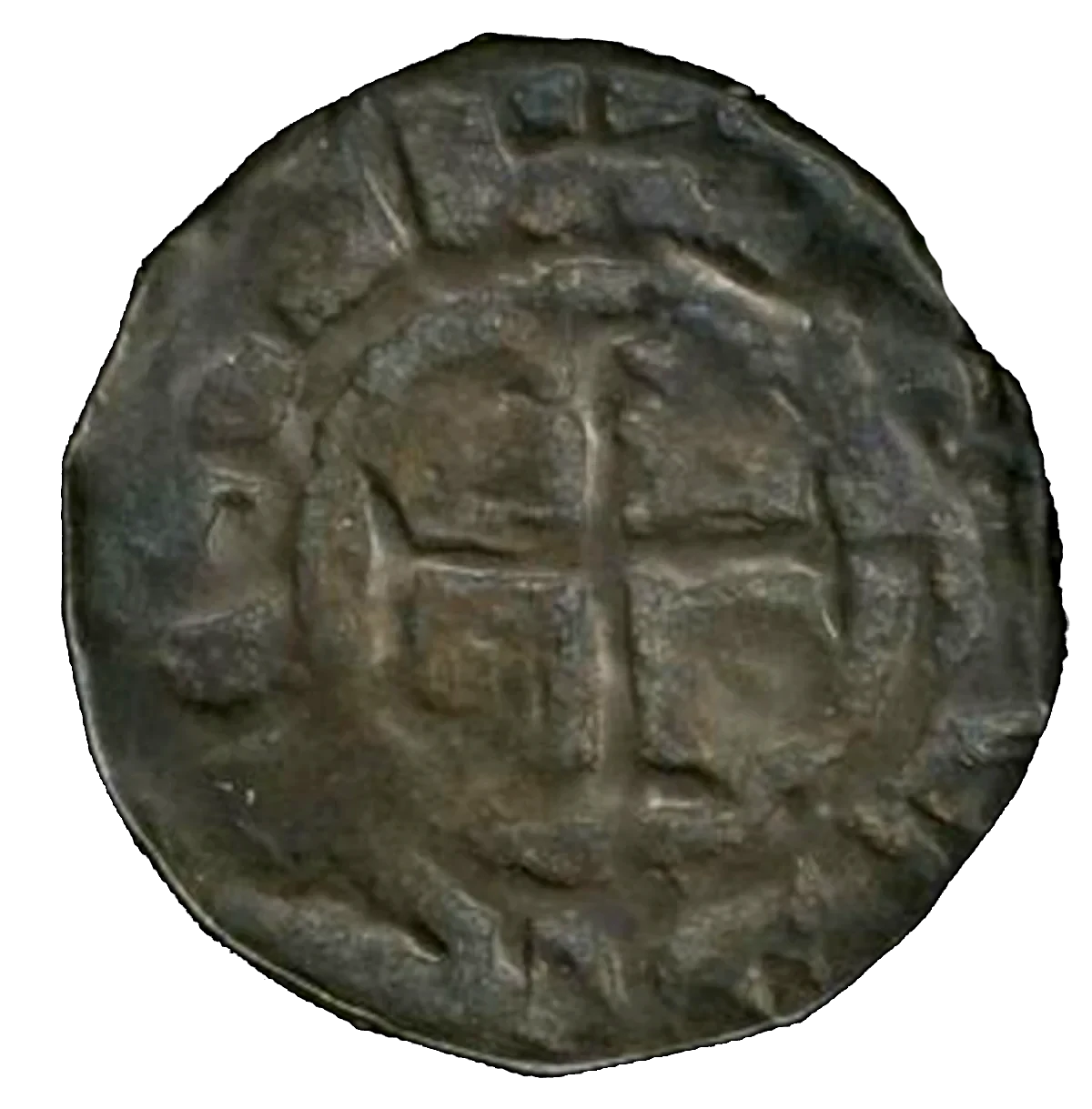
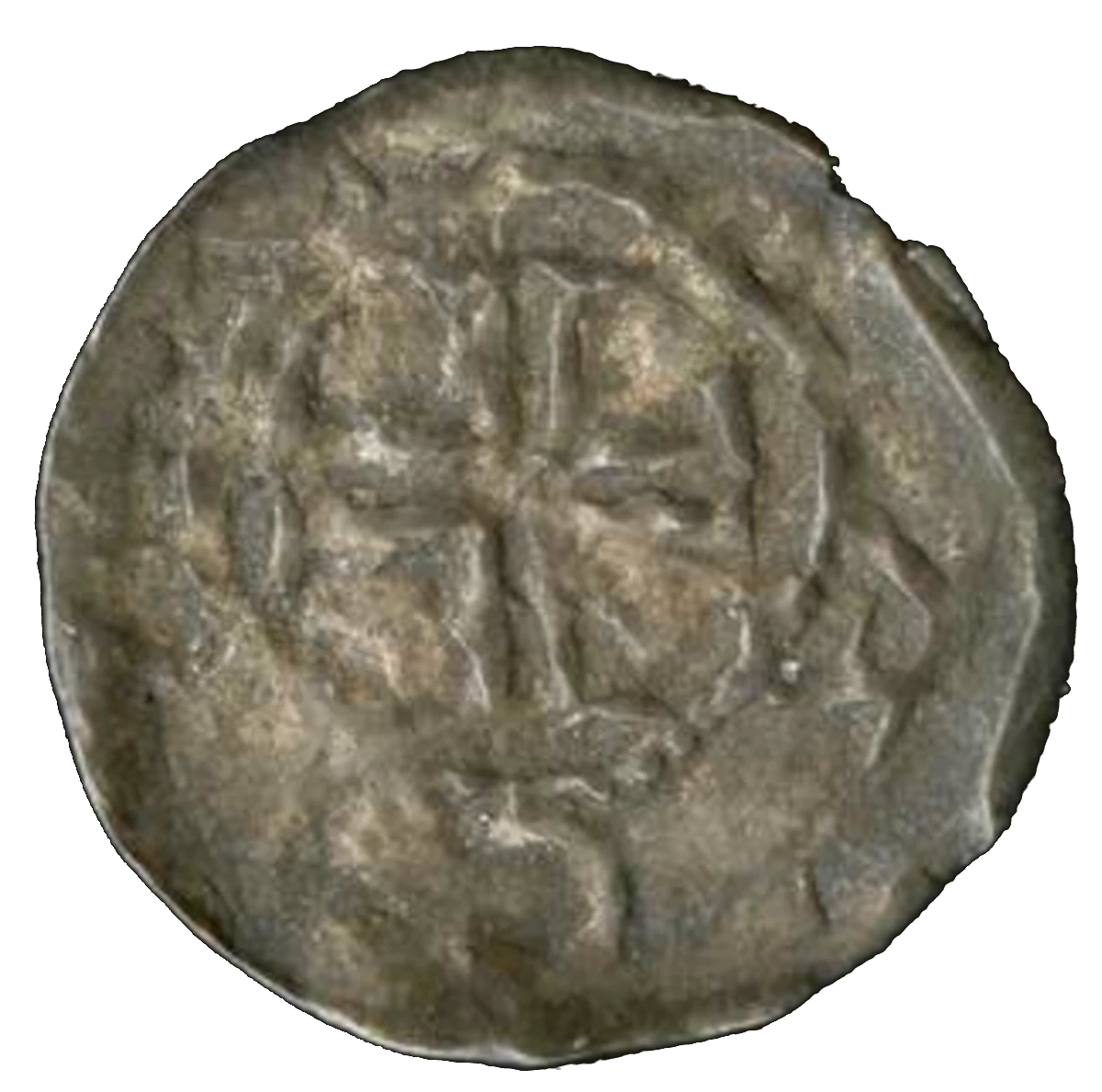
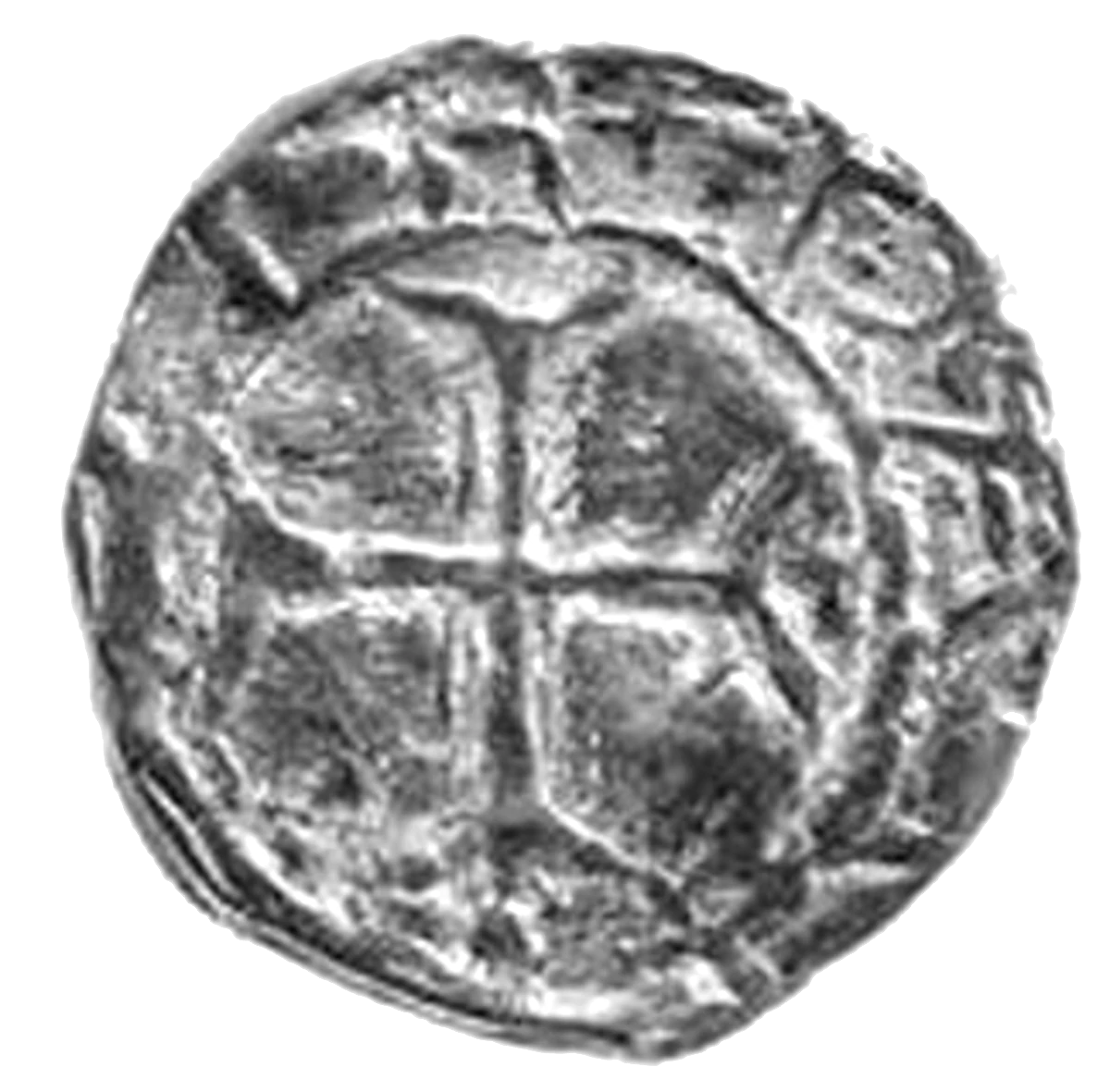
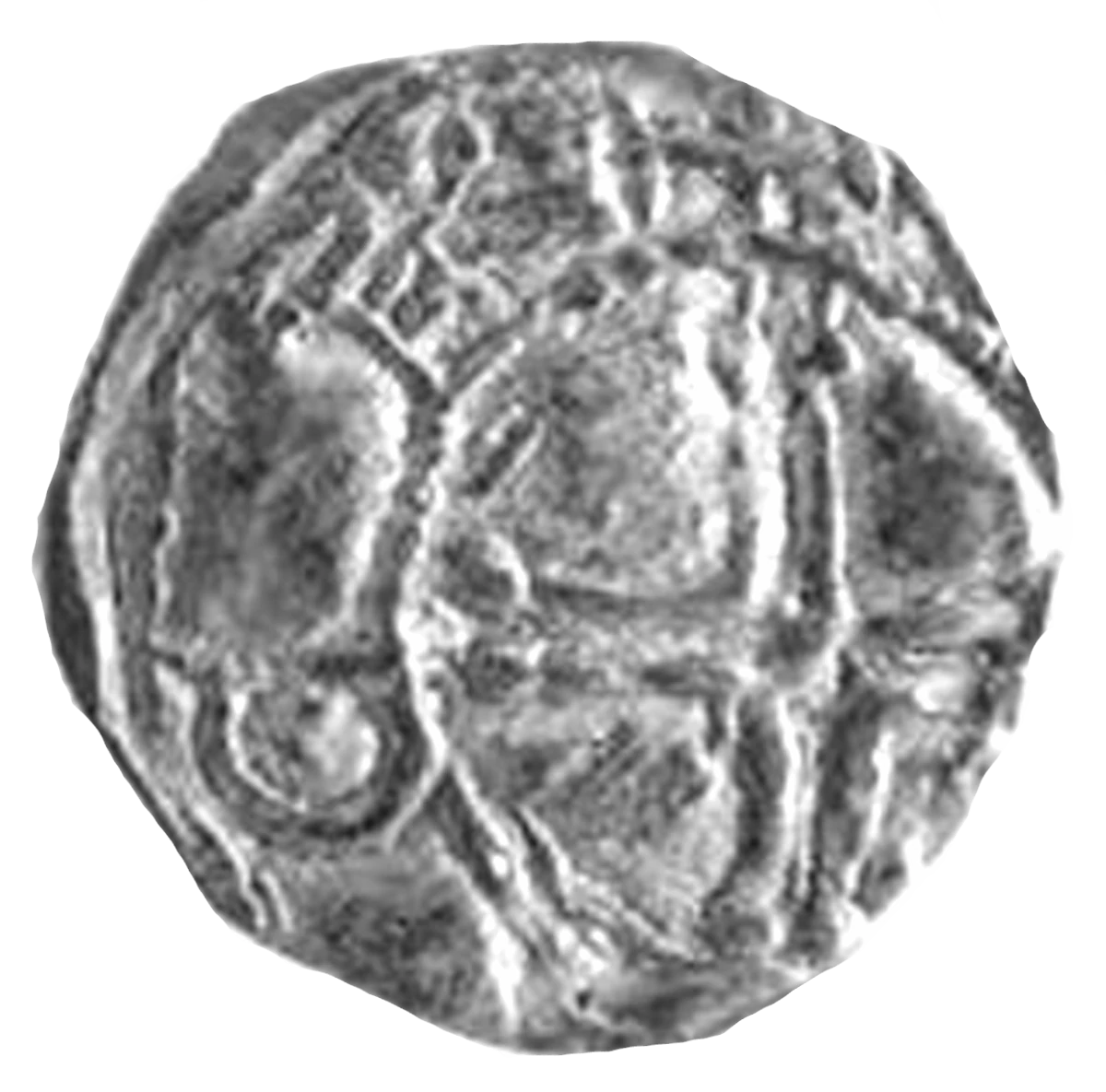
De Courcy endowed several churches, abbeys and monesteries, and promoted the cult of St Patrick. This is reflected in his coinage, that when not struck with is name, has St Patrick's name and the name of one of two mints:
Downpatrick (Anonymous Coinage)
Downpatrick (St Patrick Coinage)
Carrickfergus (Anonymous Coinage)
Martin Allen has asserted that the John de Courcy farthings are actually halfpennies, accompanyed by a die study,1, and this is reflected in recent editions of 'Coins of Scotland, Ireland and the Isles' 2.
Struck between c.1185 and c.1205, there are over 90 known examples, generally poorly struck.
Historical Context
John de Courcy remains one of the most significant figures of the Norman conquest of Ireland, establishing an independent lordship in Ulster that lasted for approximately twenty-seven years. In 1177, he led a private expedition into eastern Ulster, capturing Downpatrick and defeating the King of Ulaid (Ulidia). Within five years he had subdued the kingdom of Ulaid, encompassing much of present-day Counties Down and Antrim, and ruled the territory as an autonomous prince. Although he assumed the title "Lord of Ulster," there is no contemporary evidence that this dignity was formally granted by King Henry II, highlighting the exceptional degree of independence with which he exercised power.
Coin Characteristics - Cross Potent with Crescents Coinage
- Metal: Silver
- Denomination: Farthing (¼ penny)
- Mint(s): Downpatrick
- Obverse: Processional cross consisting of cross pattée with knop and shaft below; +PATRICII
- Reverse: Cross potent with crescent in each angle; +DE DVNO
- Coin diameter: 10-11mm
- Weight: 0.32g
Coin Examples - Cross Potent with Crescents Coinage ↩
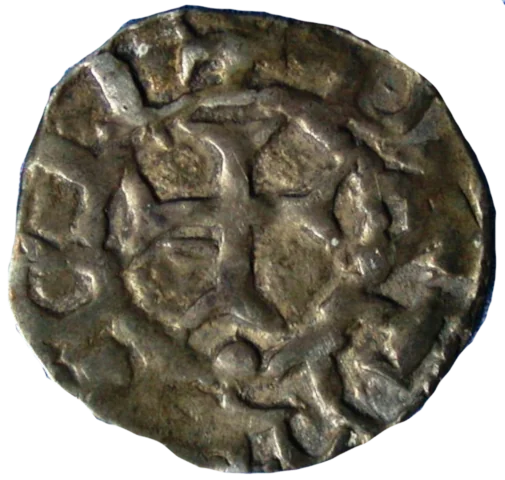
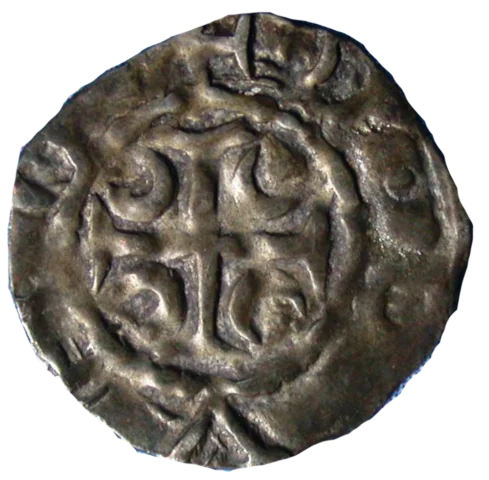
Year(s): c.1185-c.1205
Mint: Downpatrick
Obverse: Processional cross consisting of cross pattée with knop and shaft below; +PATRICII
Reverse: Cross potent with crescent in each angle; +DE DVNO
Reference(s): Spink 6227, DF 47
Scarcity: Very rare
Guide Price: £1100 (Fine) £3000 (Very Fine)
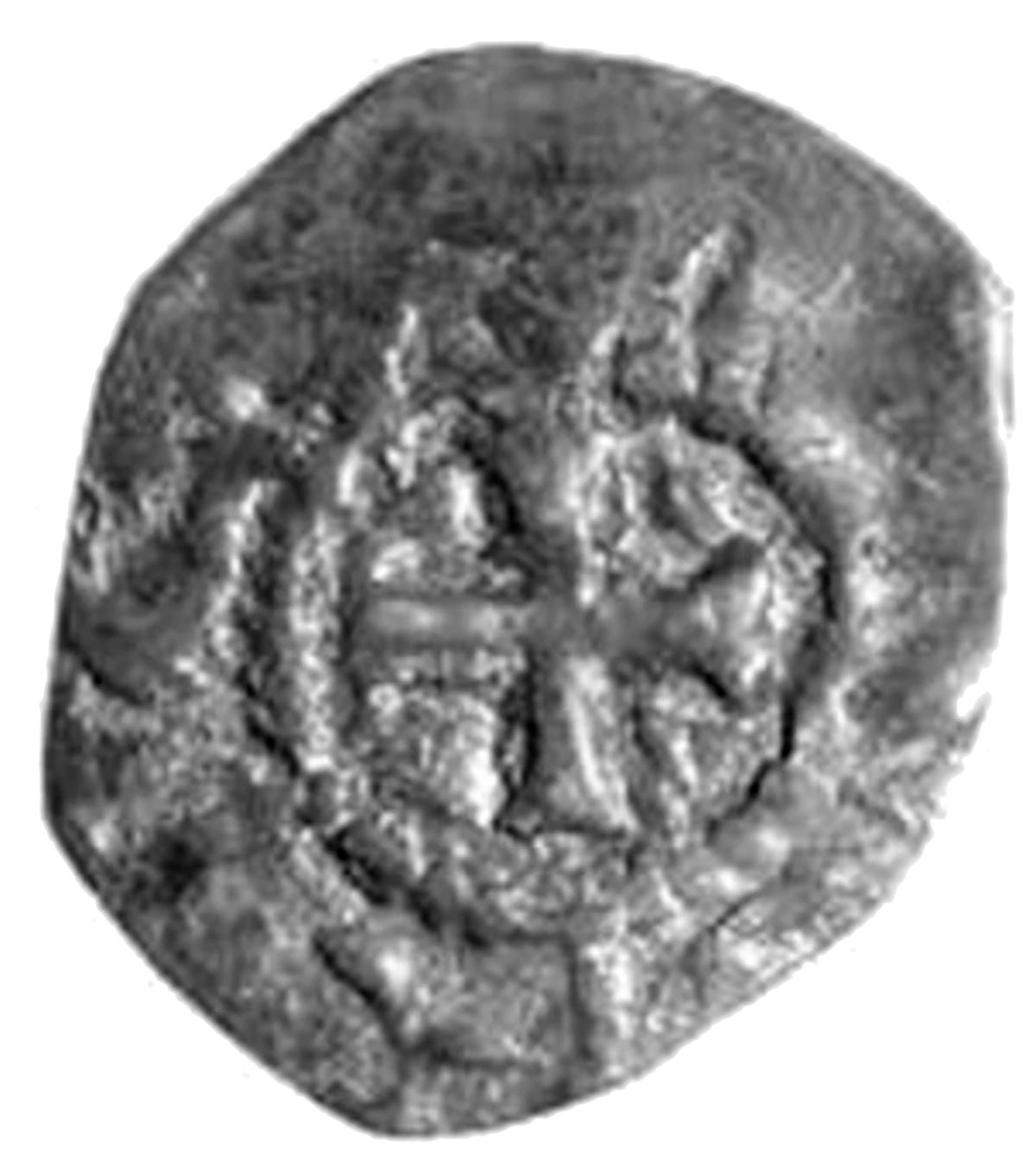
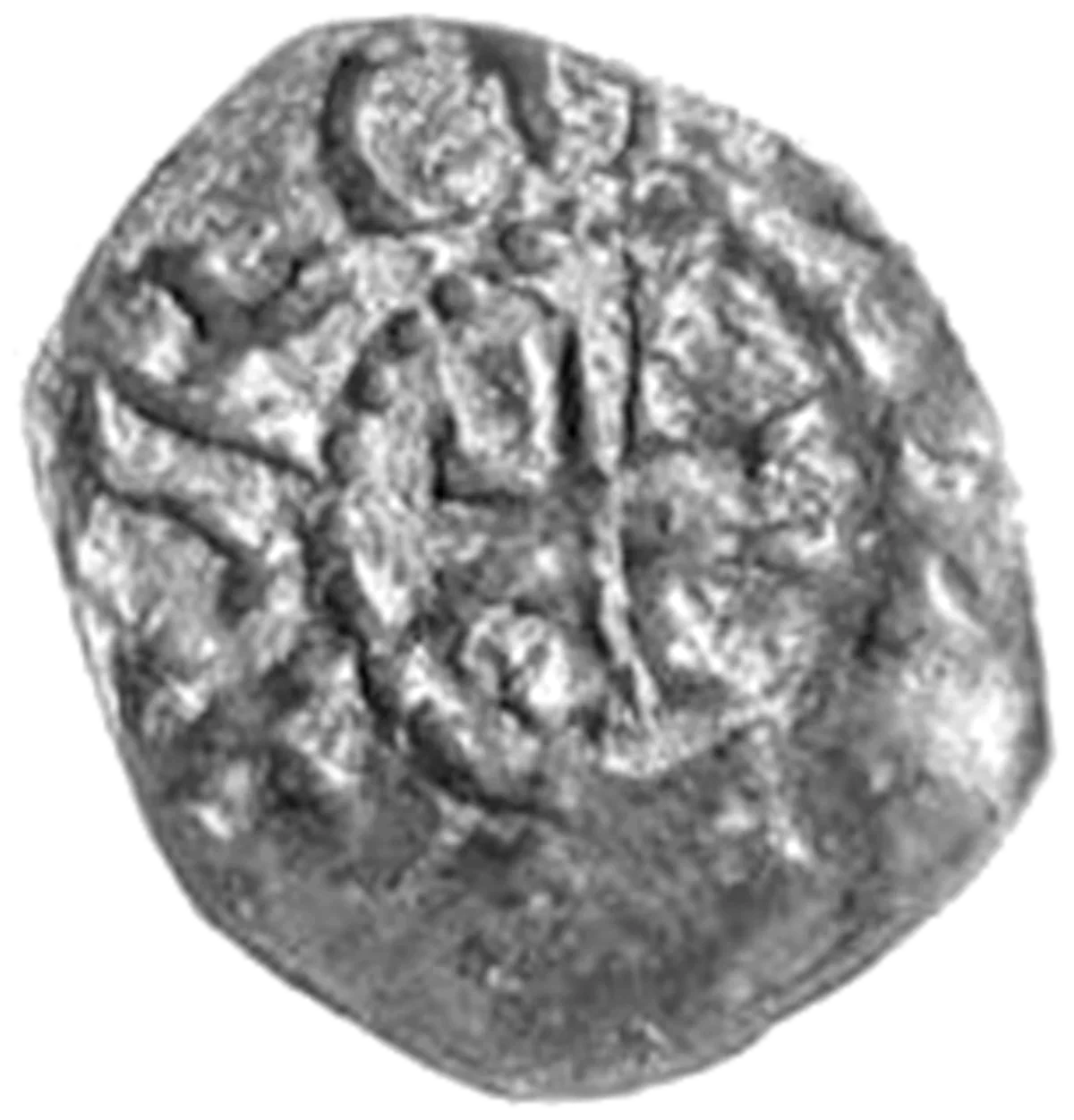
Coin Characteristics - Cross Potent Voided Patrick coinage, John de Courcy reverse
- Metal: Silver
- Denomination: Farthing (¼ penny)
- Mint(s): No mint name, probably Downpatrick
- Obverse: Cross pattée; +PACRICI
- Reverse: Cross potent voided; +[ ]A[ ]HVCI or +[ ]AND.CV[R?][ ]
- Coin diameter: 10-11mm
- Weight: 0.32g
Coin Examples - Cross Potent Voided Patrick coinage, John de Courcy reverse ↩
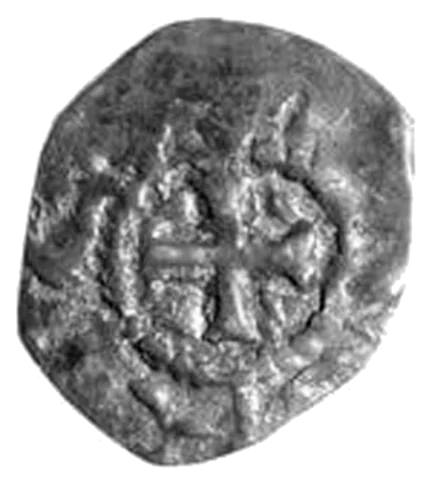
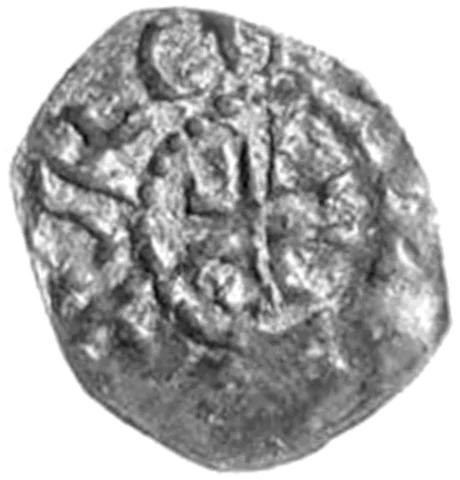
Year(s): c.1185-c.1205
Mint: probably Downpatrick
Obverse: Cross pattée; +PACRICI
Reverse: Cross potent voided; +[ ]A[ ]HVCI or +[ ]AND.CV[R?][ ]
Reference(s): Spink 6224, DF 49
Scarcity: Very rare
Guide Price: £2250 (Fine) £6500 (Very Fine)
Coin Characteristics - Cross Potent Voided Patrick Coinage, Carrickfergus reverse
- Metal: Silver
- Denomination: Farthing (¼ penny)
- Mint(s): Carrickfergus
- Obverse: Processional cross consisting of cross pattée with knop and shaft below; +PATRICI(I)
- Reverse: Cross potent voided; +CRACFEVF(.) or +CRACF(‘)
- Coin diameter: 10-11mm
- Weight: 0.32g
Coin Examples - Cross Potent Voided Patrick Coinage, Carrickfergus reverse↩
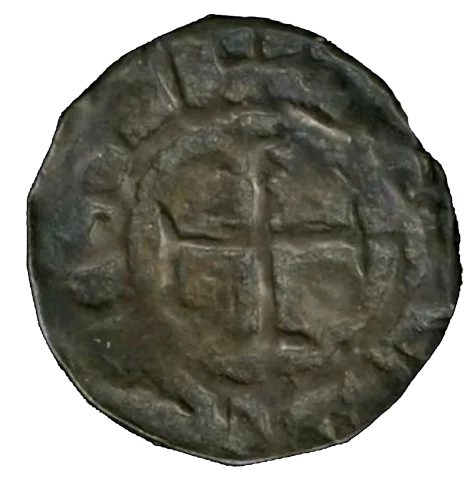
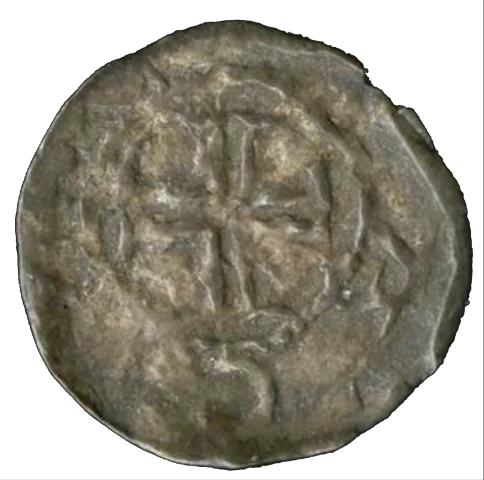
Year(s): c.1185-c.1205
Mint: Carrickfergus
Obverse: Processional cross consisting of cross pattée with knop and shaft below; +PATRICI(I)
Reverse: Cross potent voided; +CRACFEVF(.) or +CRACF(‘)
Reference(s): Spink 6225, DF 48
Scarcity: Very rare
Guide Price: £1100 (Fine) £3000 (Very Fine)
Coin Characteristics - Cross Pommée Voided Patrick coinage
- Metal: Silver
- Denomination: Farthing (¼ penny)
- Mint(s): Carrickfergus
- Obverse: Cross pattée; +PACRICI
- Reverse: Cross potent voided; +[ ]A[ ]HVCI or +[ ]AND.CV[R?][ ]
- Coin diameter: 10-11mm
- Weight: 0.32g
Coin Examples - Cross Pommée Voided Patrick Coinage ↩
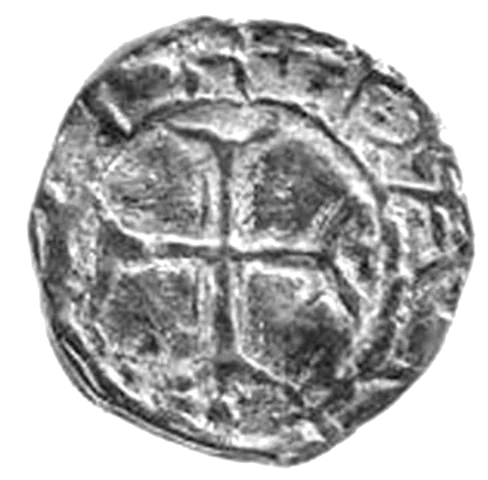
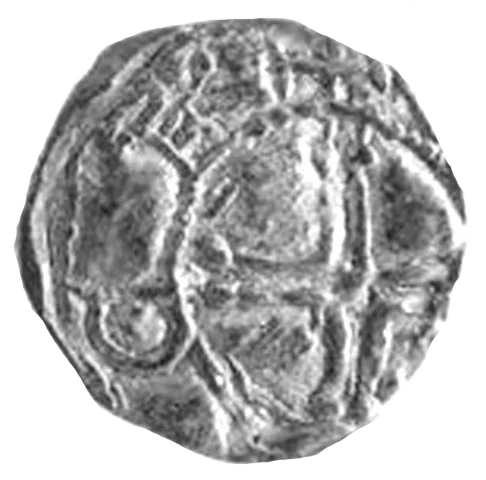
Year(s): c.1185-c.1205
Mint: Carrickfergus
Obverse: Processional cross consisting of cross pattée with knop and shaft below; +PATRICII or variant.
Reverse: Cross pommée voided; +CRACF(: or ‘)
Reference(s): Spink 6226, DF 48
Scarcity: Very rare
Guide Price: £1200 (Fine) £3250 (Very Fine)
Footnotes
Research & Resources
Contact
For corrections, additional examples, or research enquiries, please email:
admin@hammeredfarthings.co.uk
+[ ]A[ ]HVCI or +[ ]AND.CV[R?][ ]
Downpatrick? - Reverse 2